Get Full Government Meeting Transcripts, Videos, & Alerts Forever!
Get email alerts on the Affordable Housing topic
No spam. Unsubscribe anytime.
Residents push for clearer language and more time on ADU assistance pilot and accessory staff housing rules
Summary
At public hearings, residents urged the board to clarify loan terms and enforcement in the ADU construction assistance pilot and to delay action on accessory staff housing pending a comprehensive plan update and legal review. Commenters asked for better public access to documents and clearer, mandatory program language.
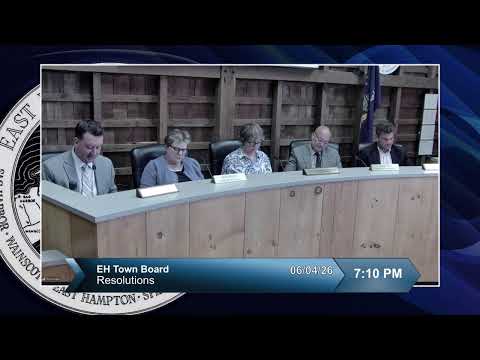
The East Hampton Town Board held public hearings June 4 on a 2026 Affordable Dwelling Unit (ADU) construction assistance pilot program and on a proposed local law to allow accessory staff housing. During both hearings residents asked for clearer program language, better availability of supporting documents and more time for public review.
A resident identified as David raised procedural and substantive concerns about the ADU pilot’s public notice and program text. He noted the hearing notice used the acronym "ADU" defined in the notice as "affordable dwelling unit" rather than "accessory dwelling unit," and argued the program should explicitly state that a town-board resolution is required before any grant is made. He objected to permissive wording in the pilot (for example, use of "may" and "could be" in sections about continued occupancy or penalties) and asked that the program replace vague phrases with mandatory language and specify applicable penalties.
Lorraine Bonaventura, speaking during the public portion, urged the board to delay votes on accessory staff housing and workforce housing changes and to begin a new townwide comprehensive plan. She said the accessory staff housing draft contains complicated lease terms, a 25-special-permit limit whose application was unclear, and multiple provisions that could cause enforcement difficulties and strain town resources.
Board staff read notices at the meeting that provide locations where program documents may be reviewed (town clerk’s office and town website). David and other callers said documents were not readily identifiable online and asked the board to provide direct links and clearer postings at least 24 hours before hearings as required by the state Open Meetings Law for records being discussed.
The board closed the hearings after public comment. No substantive action on the ADU pilot or the accessory staff housing law was taken during the meeting’s resolutions section; members moved on to other agenda items and routine approvals.