Get Full Government Meeting Transcripts, Videos, & Alerts Forever!
Get email alerts on the Public Health topic
No spam. Unsubscribe anytime.
After sustained resident complaints, council directs town manager to study rodent-control options
Summary
Following extensive council and public comment about rat infestations across neighborhoods, the West Warwick Town Council asked the town manager to report back with options including outreach, ordinance clarifications, registration/permitting for poultry, bait‑station programs and coordination with animal control and health officials.
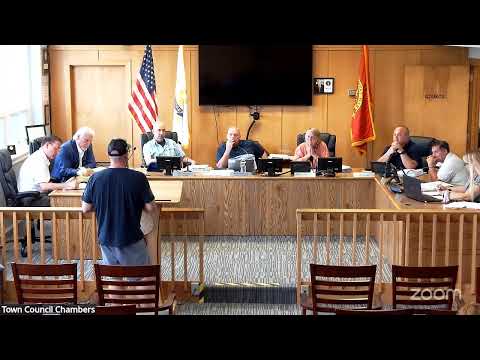
West Warwick residents pressed the Town Council on June 2 about a growing rodent problem, and the council directed the town manager to research remedies and return with recommendations.
Councilors said the town has received multiple complaints in several wards — including Green Street, Brookside Avenue and Tanglewood — that residents say reflect a recent spike in rats and other rodents. Members and staff discussed several potential contributing factors: residents feeding wildlife, high grass and property-maintenance problems, nearby construction disturbing habitat, and climate variability. “It’s getting some traction now … we are seeing rodent infestations where there were none prior,” one councilor said.
The discussion covered enforcement limits and due process: staff noted the building official and animal-control officers may send educational flyers, notices of violation and, if necessary, pursue municipal-court enforcement or clean-up ordered by the town with a lien placed on the property. A councilor asked whether animal-control or health authorities might assist, and building-office and health–safety statutes were cited as the legal bases for property access for health and safety investigations.
Residents who spoke during public comment described personal impacts: Derek Reed said rats were entering his yard and emerging from a recycle bin near his sliding door and asked for immediate action. Another resident described visible tunnels and holes in yards and urged broader neighborhood notification and faster follow-up. Officials acknowledged limits — notices and judicial timelines can take weeks — but agreed the manager should compile options, including creating an inventory of properties with chickens or coops, producing homeowner education for the tax-bill mailing, exploring bait‑station programs (noted as used in Providence), and clarifying ordinance language on poultry and minimum lot sizes.
Councilors asked the town manager to consult with animal control, health officials and the League of Cities and Towns, and return with a menu of administrative and regulatory options that balance public health, humane treatment of animals and residents’ property‑rights concerns.