Get Full Government Meeting Transcripts, Videos, & Alerts Forever!
Get email alerts on the Cooperative Extension topic
No spam. Unsubscribe anytime.
Amy Lucas highlights Extension outreach and new drone-driven precision agriculture in Alleghany County
Summary
Alleghany County Extension Director Amy Lucas and staff described outreach that reached more than 2,500 direct contacts in 2025 and outlined how drones and precision agriculture are being used on local Christmas-tree and greenery operations. Presenters also detailed youth programming, market growth and farm-safety trainings.
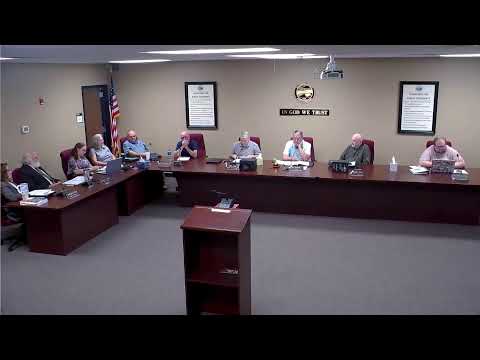
Amy Lucas, Alleghany County Extension director, told the Board of Commissioners on June 1 that the county extension office recorded more than 2,500 direct contacts and roughly 185,000 digital contacts in 2025 while serving more than 800 youth through 4‑H and school-based hands-on programs. "We provide programming not only in person but also online," Lucas said, and she credited staff for outreach across the county.
Brad, an extension educator, told commissioners that Alleghany County’s growers produce a high volume of Christmas greenery and increasingly work with large floral operations to ship products to national chains. "This county right here, as small and as mighty as it may be, we're producing more greenery in this county than any other county in the nation," Brad said, describing roping, wreaths and other products that supply retailers.
A central portion of the presentation focused on precision agriculture and the adoption of agricultural drones. Brad described operational details and economics: the drones the county uses can lift roughly 180 pounds of payload; in a recent day a crew with one drone put out about seven tons of fertilizer; and a complete drone setup (generator, multiple batteries) can be in the neighborhood of $50,000. He added that individual drone batteries cost about $2,000 and that many of the systems now include LIDAR/radar for auto-navigation and repeatable GPS-guided application.
"The drones are basically about the size of a vehicle," Brad said, describing how a mapped flight path allows the drone to return precisely to the point where a hopper emptied. Extension staff told the board that using drones can reduce fertilizer use through more precise application and lower labor costs compared with manual spreading.
Jill, the Extension local-foods and market manager, said the Alleghany Farmers Market and associated commercial kitchen in Jefferson have expanded. She said the market is at capacity with 25 full-time vendors, 26 spaces total and a wait list of eight, and she is pursuing a satellite culinary certificate program with Wilkes Community College to help local restaurants find trained line cooks.
Extension staff also reviewed outreach and safety programming: a regional beef-reproduction course and a bilingual farm-safety training that drew about 225 participants and included the sheriff's office, the rescue squad and the Glade Creek Fire Department. Staff described youth cattle-working contests that have grown to regional and national levels and reported that the recent county fair involved more than 500 participants and returned roughly $6,500 in scholarships to local students.
Presenters warned that poison hemlock has been more prevalent this season and can be hazardous to people and livestock if touched; recommended controls included broadleaf herbicides such as 2,4‑D or glyphosate and a planned producer meeting to discuss control methods.
Commissioners thanked the Extension team, recognized administrative assistant Michelle Ham for behind‑the‑scenes work and invited residents and officials to visit growers and upcoming drone demonstrations. "Come see it," Brad said. The presentation ran from the Extension introduction through a series of program updates and community-outreach items.