Get Full Government Meeting Transcripts, Videos, & Alerts Forever!
Get email alerts on the Tourism topic
No spam. Unsubscribe anytime.
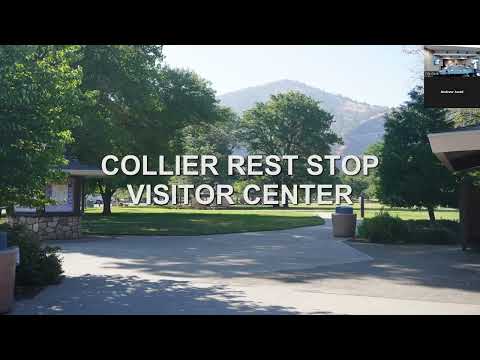
Collier Interpretive Center asks Yreka City for awareness and discretionary support as revenue falls
Summary
Renie Cleland told the Yreka City Council the Collier Interpretive and Information Center (C2C) has seen advertising revenue and visitor-staffing decline since 2020, forcing the center to eliminate its only paid position; he asked the council for awareness, volunteer support and possible discretionary funding while noting full annual operations are roughly $40,000$50,000.
Renie Cleland, a longtime volunteer with the Collier Interpretive and Information Center (C2C), told the Yreka City Council on April 7 that the site has played a key role promoting tourism along Interstate 5 but has suffered steep declines in advertising revenue since the COVID-19 pandemic.
Cleland outlined the centers history and joint-powers origins, saying local leaders and federal and state partners helped establish the facility in the early 1990s. He said the center was designed to steer travelers off the I-5 corridor to local businesses, parks and services and that, historically, Caltrans supported the site in partnership with local volunteers and advertisers.
"We survived for a long time on a very limited budget," Cleland said. He told the council the center recently had to let go its only paid employee, a retired local resident named Ellen Johnson, because advertising and other revenue "has lessened and lessened." Cleland said last year the center recorded 663 visitor sign-ins in its guestbook and that Caltrans once estimated 700,000 vehicles used the rest area annually when the site opened; he described the current gap between volunteer capacity and fixed costs as a financial strain.
Council Member Davis asked whether the presentation was a request for city funds. Cleland said his primary goal was awareness and partnership opportunities, including advertising and volunteer support, but he added that discretionary funds could help cover volunteer mileage, insurance and limited staffing support. "I'm not asking for that those kind of dollars here," he said, but acknowledged that full operating needs were likely closer to $40,000$50,000 per year.
The presentation emphasized local economic value: Cleland said the center exposes thousands of travelers each week to services in communities such as Etna, Weed and Hornbrook and that many visitors describe the site as a destination. He asked the council to coordinate with C2C leadership and the joint-powers authority to explore stable support and advertising partnerships.
No formal action or funding vote followed the presentation. Mayor Colleen Baker and council members encouraged follow-up conversations; the mayor urged staff and council members who are interested to meet with Cleland to discuss what specific support might be possible.
Next steps: Cleland said he would meet with council members and staff to detail specific needs and advertising options; the council did not commit city funds during the April 7 meeting.