Get Full Government Meeting Transcripts, Videos, & Alerts Forever!
Get email alerts on the Zoning topic
No spam. Unsubscribe anytime.
After voters reject townwide zoning changes, Enfield planning board plans narrower, clearer next steps
Summary
Following a voter rejection of proposed townwide zoning amendments, the planning board held an extended debrief focusing on why the measure failed — residents associated the changes with a proposed Laramie Farms development, density figures and math errors alarmed voters, and board members proposed reformatting the ordinance and pursuing smaller, district‑level warrant articles next year.
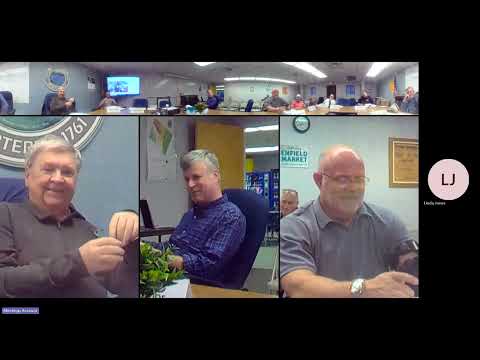
The Enfield Planning Board spent the bulk of its March 11 meeting dissecting why voters rejected a package of zoning amendments at recent town voting and mapping out next steps. Board members concluded the defeat reflected a mixture of messaging failures, a strong association by voters between the ordinance and a high-profile proposed development, and communication errors — rather than clear public consensus on specific ordinance clauses.
Board members said turnout was higher than in past sessions and that many voters viewed the proposed changes through the lens of the Laramie Farms project, even though the amendments were presented as technical zoning updates and new district boundaries. Members reported hearing repeated, emotionally driven opposition framed as resistance to change; others said an erroneous media figure that overstated how many new units the ordinance could allow amplified concern about density.
Participants identified several concrete problems in the outreach and presentation: an overly long administrative document (reported at roughly 175 pages), dense technical language, limited time at public forums to walk groups through maps and specifics, and errors in the math used in public materials that led to incorrect claims about population‑scale impacts. Board members said those errors were unintentional but likely influenced voter perception.
As a result, board members discussed strategic options for approaching the issue next year. Near-term proposals included reformatting the ordinance to be clearer and less technical, separating administrative code cleanups from substantive land‑use changes, and presenting smaller, district‑specific warrant articles (for example starting with Route 4 or downtown) rather than a single, townwide package. Members also recommended conducting post‑vote outreach and market research to learn why specific voters opposed the amendments and to test simpler messaging tied to housing goals in the upper valley.
Several members urged patience and recommended letting the results 'digest' before taking further action; a few suggested reconvening in about a month to decide specific next steps. Board members also highlighted practical consequences of the vote: some proposed developments will remain constrained under current zoning (requiring variances or delaying projects), and certain technical corrections still need staff time even if substantive changes are delayed.
The board agreed to hold further discussion at a subsequent meeting and to consider targeted, smaller warrant articles and clearer public communications rather than re‑presenting the full townwide package in an unchanged form.
Next steps: staff and board members will review outreach materials, consider splitting proposed changes into smaller articles, and reconvene to set a timeline for any renewed effort.