Get Full Government Meeting Transcripts, Videos, & Alerts Forever!
Get email alerts on the Medicaid Policy topic
No spam. Unsubscribe anytime.
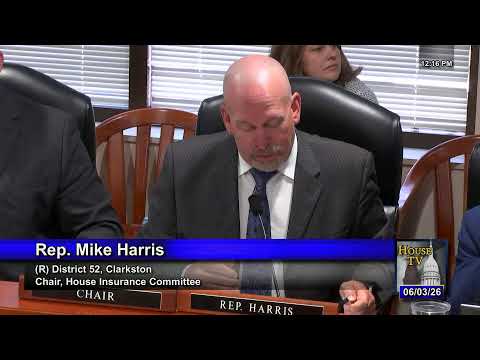
Committee hears testimony on HB 5814 to align Michigan law with new federal Medicaid retroactive-coverage rules
Summary
Witness Caitlyn Finley (FJA action) told the House Insurance Committee HB 5814 aligns Michigan statute with new federal limits on retroactive Medicaid eligibility (one month for expansion enrollees, two months for others). Committee members questioned funding implications and why the change belongs in statute rather than administrative code; several organizations later registered opposition on the record.
The Michigan House Insurance Committee heard testimony on House Bill 5814, which would align Michigan law with recent federal changes that shorten retroactive Medicaid eligibility windows.
Rep. Maddock introduced the bill as a measure intended to reduce waste, fraud and abuse by aligning state practice with federal requirements and invited expert testimony. Caitlyn Finley, who identified herself as working with FJA action, told the committee she supports HB 5814 and said the bill “simply aligns Michigan law with the new federal requirements regarding Medicaid coverage.” She summarized the federal change as shortening retroactive eligibility to one month for expansion enrollees while preserving two months for non-expansion populations and described HB 5814 as “a clean update that reflects current federal law.”
Vice Chair Tisel asked whether the state retains authority to pay for retroactive care beyond federal matching. An agency respondent identified in the record as Kaylin confirmed that federal financial participation (matching funds) will not cover months beyond the federal limit and that if the state extended coverage beyond the new federal-eligible months, the state would have to fund those months entirely, substantially increasing state costs.
Rep. Fitzgerald asked why the statutory change is necessary if federal law already requires the coverage change and how potential beneficiaries would know about the adjustment. Finley answered that Michigan’s current policy sits in the administrative code and that placing the requirement in statute clarifies legislative intent, reduces the risk of future administrative change, and ensures the policy is disclosed to applicants and the staff who assist them when they apply for Medicaid.
The clerk read witness cards placing several organizational oppositions on the record: Chararda Burton (DHHS), Amber Bellazer (Michigan League for Public Policy) and Kelly Bedwin (Michigan Nurses Association) each registered opposition and did not wish to speak. The committee took no vote on HB 5814 during this meeting and adjourned after excusing absent members.
The committee’s discussion distinguished between the federal rule change (which limits federal matching for retroactive months) and state-level authority to fund additional months, with witnesses and staff advising that extending coverage beyond the federal-eligible months would require state-only dollars.