Get Full Government Meeting Transcripts, Videos, & Alerts Forever!
Get email alerts on the Transportation topic
No spam. Unsubscribe anytime.
City reviews 2026 traffic speed survey; recommends small reductions on three segments
Summary
A Wood Rogers engineer presented the city—s 2026 speed-zone survey showing recommended changes to a handful of road segments; council asked staff to revisit one abrupt transition before adoption. The report sets enforceable speed limits under California Vehicle Code and CA MUTCD.
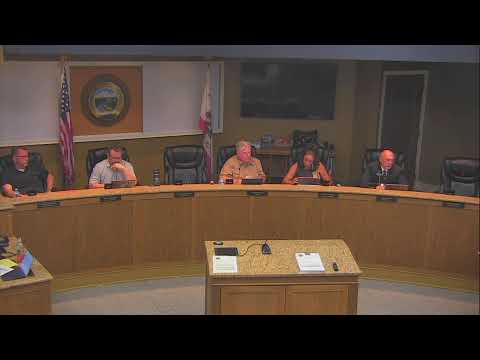
Mario Tambolini of traffic engineering firm Wood Rogers presented the city—s 2026 Speed Zone Engineering and Traffic Survey, explaining that California law requires a registered engineer to develop speed surveys so posted limits on non-local roads are enforceable. He told the council the study covered 53 segments and that 48 should remain unchanged.
The study recommended three modest reductions: Long Bar Road from 35 mph to 30 mph, Lower Wine Dot Road from 40 mph to 35 mph, and Table Mountain Road from 45 mph to 40 mph. Two unposted locations received recommended posted limits: Garden Drive at 45 mph and Larkin Road at 55 mph. Tambolini described the 85th-percentile method used to set initial limits and noted limited options the city has to lower limits beyond narrow statutory allowances for pedestrian or safety corridors.
Councilmembers pressed on pedestrian safety, enforceability, and abrupt drops between posted limits. Councilman Thompson said a sharp change (for one residential/business segment currently posted at 25 mph adjacent to a 40-mph area) risked creating a "speed trap" and cited past dismissed citations; Tambolini said the city may maintain a prior posted speed where older surveys supported it, but staff agreed to re-examine the adjacent segments and transitions and consider changing nearby posted segments to smooth the progression.
Councilman Goodson asked whether the survey accounts for pedestrian activity near schools and community centers; Tambolini said the California Vehicle Code and CA MUTCD permit reductions for business or residential districts, high pedestrian generators, and designated safety corridors, but require evidence and follow a defined process.
The council directed staff to review segment transitions (notably the segment identified as 30 on the study) and return with a final report for ordinance adoption. Tambolini and city staff noted a typical public acclimation period when new signs are posted and said enforcement resources and sign placement will be coordinated before citations are issued.
Provenance: Topic introduced SEG 944; presentation and Q&A through SEG 1537.
Speakers quoted: Mario Tambolini (Wood Rogers), Councilman Thompson, Councilman Goodson.