Get Full Government Meeting Transcripts, Videos, & Alerts Forever!
Get email alerts on the Cemetery topic
No spam. Unsubscribe anytime.
Lafayette council forms cemetery subcommittee amid heated public appeals
Summary
Mayor Tapia Vega and Councilor Bolier were appointed to a two-member cemetery subcommittee after residents packed the meeting to plead for options ranging from casket burials to more transparent records and case-by-case reviews.
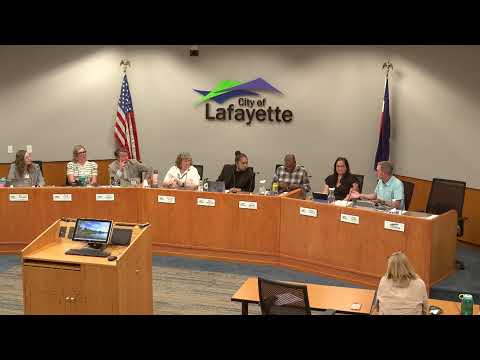
Mayor Tapia Vega opened the June 2 council meeting by announcing a formal subcommittee to examine the future of Lafayette’s cemetery and to respond to an outpouring of community concern. He said the issue is complex and may require decisions years from now, but that the council heard residents’ objections to prior staff and consultant recommendations and wants a focused process to develop options.
Councilor Bolier then described a June 10 community dialogue at the Lafayette Public Library (6:30–8 p.m.) that will be facilitated by professionals and is intended as a two-way conversation. After brief comments by other council members clarifying that no action to close the cemetery was on the agenda, the council moved to formalize the subcommittee and voted unanimously to appoint Mayor Tapia Vega and Councilor Bolier.
The council then opened the public input period. For more than three hours residents described personal impacts, historic ties and legal concerns. Several speakers said past municipal record‑keeping failed to document burials in parts of the cemetery (frequently identified as Potterfield and “east/west” sections), leaving many plot owners uncertain whether casket burials remain available for paid plots. Frank Archeletta urged the council not to adopt what he called “Resolution 2613” and demanded options that would preserve families’ rights to casket burials. Multiple elderly residents, including Gertrude Garcia, described lifelong ties to Lafayette and pleaded to be buried beside spouses rather than be forced into cremation for religious or financial reasons.
Speakers pressed the city for site‑specific information from the ground‑penetrating radar (GPR) study, paper burial records and for clearer outreach to the roughly 270 plot owners identified in communications. Multiple residents offered to help contact owners and volunteered community lists they said would correct the city’s notification gaps. Others asked that any restrictions be applied only to the limited area where remains have been found, and that exceptions be considered for imminent deaths.
Council members acknowledged the depth of public emotion and the value of continuing engagement. Councilors urged improved communications and recommended that the subcommittee include resident perspectives in upcoming meetings and the June 10 dialogue. The mayor and council emphasized that the subcommittee’s work is intended to produce recommendations to council, not immediate policy changes.
The subcommittee members are expected to coordinate outreach and report back to council with options and a recommended path for resolving legal, technical and cultural questions raised by the public. The June 10 facilitated dialogue was advertised by council and staff as the first public step to gather further input.