Get Full Government Meeting Transcripts, Videos, & Alerts Forever!
Get email alerts on the Zoning Form Based Code topic
No spam. Unsubscribe anytime.
Brockton committee hears push for form‑based zoning but delays vote after legal and staffing concerns
Summary
City planners and a consultant told the ordinance committee the proposed form‑based code would target four neighborhoods and speed development, while the building commissioner and city attorney warned the draft has enforcement, timing and legal vulnerabilities; the committee postponed action to allow revisions.
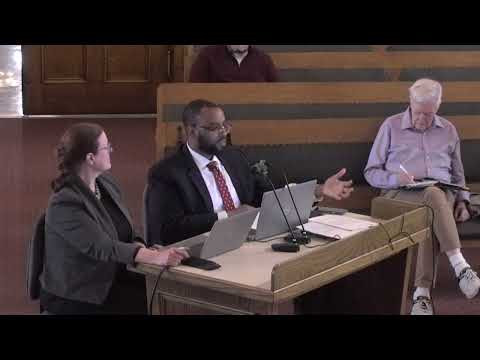
BROCKTON, Mass. — The Brockton Ordinance Committee on June 2 heard a detailed presentation on a proposed form‑based zoning code aimed at four neighborhoods, but postponed action after sustained questions about staffing, review timelines and legal clarity.
Interim Director of Planning and Economic Development Elijah Romulus told the committee the form‑based code is the product of three years of work and community input and is intended to apply to four focused areas — Montello, downtown/Trout Brook, Campello and Lovebrook — rather than the entire city. "This form‑based code is a long time coming. This is three years of careful development," Romulus said, adding the approach is meant to modernize a car‑centric code and to “unlock public‑private partnerships.”
Consultant Emily Inis of Inisland Strategies presented the structure of the proposal and the three companion documents: the official code (formatted for MUNicode), an illustrative code for public use, and advisory design guidelines. She said the draft includes district maps, building‑type standards, tables of uses and a "green score" to address stormwater and heat‑island effects.
Supporters argue the code would reduce reliance on special permits and variances, speeding projects that align with the city's adopted neighborhood plans. Romulus read a letter from Charter Development describing a proposed "Brockton Yards" project that the letter says would create "approximately 1,300 new apartments and town homes" and 11 acres of public open space, and which, the letter states, would face regulatory delay without the form‑based code.
But presenters and committee members acknowledged tradeoffs: several councilors and department heads cautioned that shifting many decisions into administrative review or to the planning board could create bottlenecks if staffing is not increased.
"There are concerns about what our current staffing levels are — are we creating a bottleneck because of existing staffing issues?" Councilor Castro asked. Inis said the code uses thresholds and checklists to move certain projects to administrative review and that applicants may appeal administrative decisions to the planning board under the draft language (noted in section 11.1.20).
William Forte, the city's commissioner of buildings, said the department can work with planning but flagged operational issues he urged lawmakers to fix. He called for clearer parking rules and sharper timelines for reviews, and objected to draft language that he said could allow permits to proceed by default if other departments fail to act. "If it sits there more than 30 days, it gets denied," Forte said of building‑permit timelines, noting state building‑code requirements. He also urged removing a provision that he said would treat a certificate of occupancy as unnecessary after 10 days.
City Attorney James Burke delivered the most pointed legal critique. He said the ordinance, as written, relies heavily on subjective terms and delegates too much discretion to staff, which could make it vulnerable to legal challenge. "This is not a zoning ordinance. It's a planner's guide," Burke said, insisting the draft needs clearer, objective standards to comply with state requirements and to avoid arbitrary enforcement.
The meeting demonstrated the competing objectives behind the proposal: planners and developers pushing for a predictable, form‑driven framework to catalyze redevelopment and housing; operational staff demanding enforceable timelines and protections for building‑permit procedures; and legal counsel urging sharper, measurable standards to withstand review.
With those tensions unresolved, a motion to postpone consideration of the ordinance and a companion zoning‑map amendment passed; the committee chair said members expect another ordinance committee meeting before the end of the month to continue refining the draft.
What happens next: Committee members asked planning staff and the consultant to return with tightened language on appeals, administrative thresholds, parking, permit timetables and certificate‑of‑occupancy provisions. The item was postponed to allow those revisions and additional review by legal counsel.