Get Full Government Meeting Transcripts, Videos, & Alerts Forever!
Get email alerts on the Municipal Budgeting topic
No spam. Unsubscribe anytime.
Mesa City Council reviews proposed FY 2026–27 budget, explains reserves and pension plan
Summary
At a June 1 study session the Mesa City Council heard staff describe more than $56 million in three‑year savings, a large carryover that inflates next year’s budget totals, and an aggressive plan to pay down pension liabilities while meeting reserve policy targets.
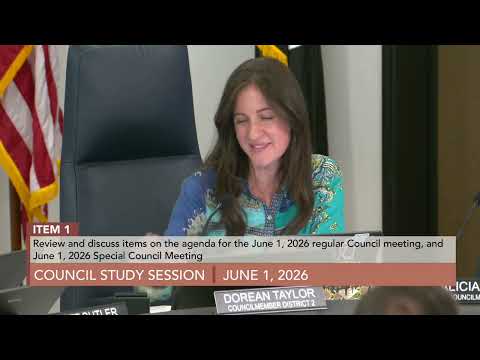
Mesa City Council members spent the June 1 study session focused on the proposed fiscal year 2026–27 budget, pressing staff for specifics about why the city’s April proposed budget showed a larger shortfall than the February forecast and how reserve and pension decisions factor into the plan.
Mr. Butler told council that staff identified more than $56 million in general‑fund savings over the past three years through efficiency measures and the elimination of unneeded positions. “Our three‑year total is over $56 million that we've saved the general fund by finding those efficiencies,” he said.
The larger apparent shortfall in the April proposed budget reflects several additions that were not in the February forecast, Finance Director Brian Ritchell said. Those included a $3 million redevelopment toolkit, roughly $5 million tied to sworn‑employee negotiations, about $2.2 million in finalized transit contracts and other departmental base increases. “As we go through the budget process … some things increase,” Ritchell said, noting those items moved the net sources-and-uses from a February projection of about negative $16 million to roughly negative $36 million in April.
Ritchell also explained that carryover — budget authorizations for purchases or projects that were not spent in the prior year — increases next year’s authorized expenditures when it is rolled forward. He said carryover is composed of projects already contracted or committed and therefore appropriately included in the proposed budget.
Staff provided examples of planned reserve use to clarify the distinction between spending that is authorized versus discretionary. Ritchell said the city sets aside funds for known, recurring costs (for example periodic replacement of police radios) and for contingencies; he cited storm damage at Falcon Field that required about $10 million as an example of when reserves were tapped for unanticipated repairs.
Ritchell gave a numerical breakdown of the city’s totals in the presentation: $474.5 million in the budget rollup, of which approximately $300.9 million is carryover from the prior year (about $169.1 million for operating/lifecycle work and roughly $131.8 million for nonbond‑funded capital projects). He also reiterated policy targets: a policy floor of 8–10% for reserve balances and a principal target of 15% for the general governmental fund.
Council members pressed staff about pension funding and amortization. Staff said the city is following a plan to reach 100% funded status by June 30, 2042, and has moved away from negative amortization. “We have now achieved … decreasing the unfunded liability and I believe it was about $60 million that we reduced our unfunded liability this year,” Sam said during the presentation. Staff also stated an annual contribution level for the full plan of roughly $109 million on the record during Q&A.
Council approved routine minutes housekeeping for agenda items 2A–D (item 2E was removed), and the session adjourned to the upstairs meetings to proceed with the evening’s council and special budget meetings.
The council’s consideration and possible adoption of the proposed FY 2026–27 budget will occur in the meetings that followed this study session.