Get Full Government Meeting Transcripts, Videos, & Alerts Forever!
Get email alerts on the Land Development Code topic
No spam. Unsubscribe anytime.
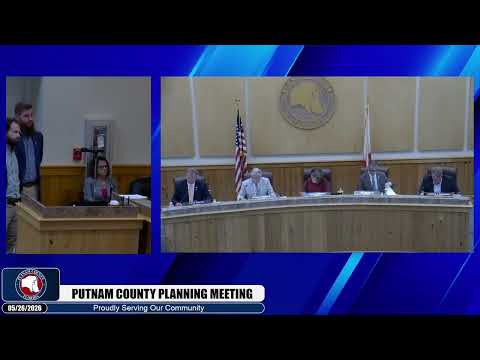
Putnam commissioners move land‑development change to second hearing, reject planning commission’s stricter sale ban
Summary
The Putnam County Commission advanced an applicant‑initiated text amendment that would remove a required agricultural future land use designation for Type 3 (family) subdivisions and approved the applicant+staff draft while omitting the Planning Commission's proposed five‑year sale prohibition. The measure will return for a second hearing.
Ethan Thompson, Planning and Development Services, told the board the ordinance amendment (LDC2600001) would remove the requirement that parcels seeking a Type 3 family subdivision carry an agricultural future land‑use designation while keeping the agricultural (A) zoning and existing minimum lot‑size standards.
"This is an application by Zachary Ford requesting an amendment to the text of the Putnam County Land Development Code…" Thompson said, noting staff’s view that the change would not substantially increase residential development or cause urban sprawl because affected parcels must still meet A‑zoning minimums.
Commissioners pushed staff to explain how the county would enforce several related rules. Commissioner Harvey said he was uncomfortable adopting changes that might be difficult or impossible to enforce, particularly a planning‑commission proposal that would prohibit any conveyance of parcels created by a Type 3 subdivision for five years. Thompson and staff clarified the existing rule reads that sales are prohibited for five years only if the parcel remains vacant and outlined the five exceptions that can allow conveyance.
Applicant Zach Ford spoke during public comment, saying the amendment would let family members build and move without an inequitable and costly plat process. "We just have a bunch of family land there and I'm just trying to get split up so that way I can live there with the rest of my family," Ford said.
After discussion, the board voted to schedule the ordinance for its required second reading at the next meeting and to advance the applicant+staff draft while excluding the Planning Commission’s stricter change to subsection 8 (the Planning Commission's draft would have removed the current vacancy condition and extended the 5‑year prohibition to developed parcels). The commission asked staff to prepare a clarified single draft showing which changes were applicant‑proposed, staff‑proposed, and Planning Commission‑proposed so members can compare versions at the second hearing.
What happens next: The amendment must return for a second public hearing (state statute requires the two‑meeting process). Staff will bring back a single consolidated ordinance and the board will vote again at the next scheduled hearing.