Get Full Government Meeting Transcripts, Videos, & Alerts Forever!
Get email alerts on the Land Use topic
No spam. Unsubscribe anytime.
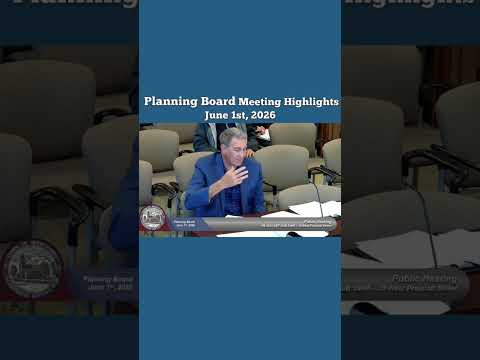
Board members debate curbing material, narrow lots and neighbor impacts in subdivision review
Summary
Board members questioned a proposed subdivision’s narrow 3-foot drainage easement, compact cul-de-sac and choice of curbing material, with some opposing an asphalt-style product and others defending its cost and maintenance given private upkeep. No formal vote was recorded in the transcript.
Board member (SEG 001) said the proposal includes a recorded 3-foot-wide drainage easement and expressed skepticism about how such a narrow easement could be maintained. “We all kind of laughed about that, because how can you have a 3-ft wide drainage easement and… maintain it with anything?” the board member said.
The same speaker noted the cul-de-sac bulb is smaller than typical large designs but added it would “still fit a fire truck,” addressing emergency-access dimensions. The speaker also said smaller lot widths make the parcel unlikely to support very large homes, telling colleagues the subdivision “will not be a $2 million 7,000 sq ft home, ’cause it just doesn't fit on there.”
Board member (SEG 018) raised neighbor-relations concerns about very narrow side-yard strips and potential disputes, warning that a homeowner might claim a narrow strip of land as part of their front yard and create conflict: “I would hate to have like some contentious neighbors and… have this person from lot four have a foot of land on someone's front yard and be able to stand there and go, ‘Oh, this is my lawn. This is my property.’”
On curbing, Board member (SEG 026) questioned the durability and cost justification for an asphalt-style curbing product proposed in materials notes, saying they did not consider the product to “really be that great a product” and raising concerns about long-term performance. During that exchange a speaker referenced a figure of "$17.65" in relation to curbing costs; the transcript did not make clear whether that number was per linear foot, per square foot, or another unit.
Board member (SEG 046) disagreed that granite curbing was categorically superior, saying granite embedded in concrete can crack over time and allow weeds to grow. “So, you see granite curbing, the concrete cracks. It's embedded in concrete, and it cracks, and you get weeds growing right along the edge,” the speaker said, adding that Cape Cod berms are inexpensive to replace and that private maintenance reduces the burden on the town.
Board member (SEG 067) said granite can better stop cars from going on the sidewalk but emphasized that vehicle speed on the street matters: “I didn't ever realize it but when I first joined the board, it really won't matter on this because I don't think people be driving fast. But the granite is a better stop for cars not going on the sidewalk.”
The discussion recorded in the transcript centered on trade-offs among long-term durability, appearance, maintenance responsibility and cost; no formal motion or vote appears in the provided transcript. The board raised concerns about narrow easements and lot dimensions that could affect maintenance access and neighbor relations and debated whether Cape Cod granite or a concrete/asphalt-style curb best fits this privately maintained subdivision.
No formal decision or vote is recorded in the provided segments; further proceedings or staff recommendations would be needed to establish a material choice or design standard.