Get Full Government Meeting Transcripts, Videos, & Alerts Forever!
Get email alerts on the Career And Technical Education topic
No spam. Unsubscribe anytime.
Trustees press CTE leaders on low industry-certification pass rates as TEA implements tier system
Summary
At a June 1 meeting trustees pressed CTE staff about low industry-based certification (IBC) attainment and plans to prepare for a new TEA tiered accountability system that caps tier-three IBCs; CTE leaders outlined vendor, curriculum, and counseling strategies to boost credentialing.
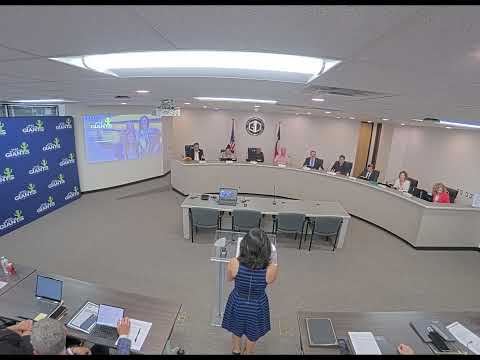
Trustees at the June 1 Goose Creek CISD board meeting questioned district career and technical education leaders about low pass rates for industry-based certifications and the district's preparations for a new Texas Education Agency tiered accountability system.
Leah Miller, CTE director, told trustees TEA has rolled out a three-tier system of industry-based certifications (IBCs). She said tier one is the highest level (23 IBCs); tier two contains the largest set of IBCs; and tier three contains additional certifications. Miller said the district must prepare for a 5% cap on tier-three IBCs that will affect initial accountability calculations beginning in 2028 and that full tier implementation and differential weighting could extend into 2031.
Trustees pressed Miller on outcomes. A board member asked why comparatively few pathway completers earned IBCs in some programs (for example, the health-science academy had 82 pathway completers but 27 who had earned IBCs on the packet summary). Miller said the district pays testing vouchers for many students but students must opt to test and that program structure and timing (including preparation and whether students reach the "expert" level on exams) affects pass rates. She said the district is adding IBC vendors, purchasing curriculum where appropriate, piloting new IBCs next school year and targeting teacher goals and nine-week CCMR (college, career and military readiness) progress checks to monitor attainment.
On specific program moves, Miller said the district will add the biomedical science IBC (a $200 exam) to the health-science pathway and will absorb that cost for students; she also said Microsoft Office Expert was proving challenging for students to reach expert-level certification and the district will add alternative credentials (such as a NOCN general business certification) to provide additional pathways.
Miller also flagged operational steps: working with CareerCraft to track student enrollment, dual credit and IBC attainment; increasing counselor advising and four-year plan meetings; and aligning practicum courses and year-long blocks under the 5x5 schedule to preserve time for hands-on skill development. Trustees emphasized accountability for teachers and asked administration to return with testing and pass-rate data showing how many students actually attempted each IBC and the passage rates.
What it means: The district is adapting CTE course offerings and supports ahead of TEA's new accountability rules to protect students' pathways to credentials while also balancing reimbursement constraints. Trustees requested clearer data on who is testing, pass rates, and how the district will prioritize tier-two and tier-one credential access for students.