Get Full Government Meeting Transcripts, Videos, & Alerts Forever!
Get email alerts on the Community Health Centers topic
No spam. Unsubscribe anytime.
Community clinics warn Medicaid changes would cut revenue and increase administrative strain
Summary
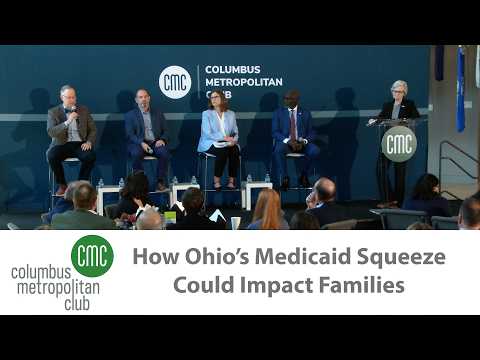
Heart of Ohio Family Health and other community health leaders told a Columbus Metro Club forum that Medicaid rule and financing changes could shrink patient coverage, reduce clinic revenue and require extensive outreach to keep people enrolled.
Community health leaders at a Columbus Metro Club forum said changes to Medicaid enrollment and financing threaten both access and clinic finances, and described concrete steps clinics are taking to keep patients covered.
Dr. Bhari Muhammad, chief executive officer of Heart of Ohio Family Health, said his network saw a substantial increase in Medicaid patients after expansion and that the centers rely on Medicaid revenue to sustain and expand services. "We move from 60 staff and now we are around 200," he said, describing how the influx of Medicaid patients enabled hiring and service growth. He also reported enrollment growth figures for his center: "8,000 in 2018, 22,160 in 2025," and warned that a renewed round of coverage losses would reverse those gains.
Muhammad described coordinated efforts among central Ohio federally qualified health centers, county Job and Family Services staff and managed-care plans to 'handhold' patients through renewed eligibility and new work-reporting requirements. "We're going to be doing a lot of handholding," he said, noting that community clinics have staff dedicated to helping patients complete paperwork, document work or community engagement activities, and connect with supports.
Panelists said past redeterminations reduced Medicaid enrollment and revenue in ways that tangibly affected clinic operations: "When the redetermination happened, Ohio lost almost 10% of Medicaid in our system," Muhammad said, and attributed an associated revenue loss to staff and service pressures.
Speakers and audience members also highlighted that many people who could be subject to new work-reporting rules are already employed in low-wage, part-time jobs without affordable employer coverage. "There are many people who work in lower wage jobs... who don't have offers of employer-sponsored health insurance," Amy Rowling McGee said, underscoring the clinics' argument that losing Medicaid could increase ER use and overall system costs.
Panelists urged planning and funding for outreach and county-level capacity before new rules take effect, and said managed-care plans have a role in coordinated outreach to help members retain coverage.
The forum did not adopt policy resolutions; clinic leaders said they will continue local coordination with county offices and managed-care plans to minimize enrollment loss.