Get Full Government Meeting Transcripts, Videos, & Alerts Forever!
Get email alerts on the Medicaid Policy topic
No spam. Unsubscribe anytime.
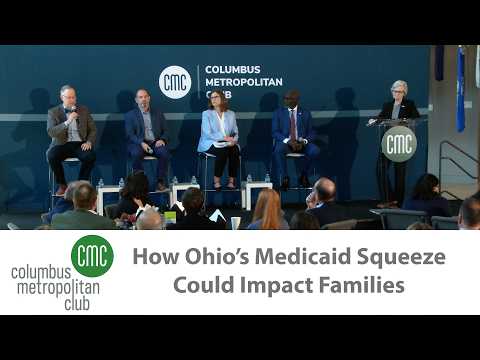
Experts at Columbus Metro Club warn Medicaid work rules and funding changes could cut coverage for hundreds of thousands
Summary
Panelists at a Columbus Metro Club forum said federal and state policy shifts — including new work requirements, more frequent eligibility renewals and cuts to provider-related funding mechanisms — could reduce coverage and pressure hospitals and community clinics, though the scale depends on implementation details.
State Senator Lewis Blessing III, former state Medicaid director John McCarthy, Health Policy Institute of Ohio president Amy Rowling McGee and Heart of Ohio Family Health CEO Dr. Bhari Muhammad told a Columbus Metro Club forum that a combination of new work requirements, shorter redetermination cycles and changes to state financing could produce significant coverage and fiscal effects in Ohio.
"Medicaid is the program ... for people with lower incomes," John McCarthy said as he summarized program basics, and he warned that fraud has been concentrated recently in home health and behavioral-health billing. "There's always going to be some type of fraud," he said, adding that tighter prior authorization rules, provider site visits and more audits are among the responses the department can use.
Amy Rowling McGee framed the scale: "There are about three million people in Ohio with Medicaid eligibility," she said, and noted that roughly 700,000 are in the expansion group created under the Affordable Care Act. She told the forum that home and community-based services currently cost about "22% less" than institutional care and that early estimates tied to the federal budget changes put potential federal funding loss to Ohio at roughly $33 billion over 10 years and projected that about 340,000 Ohioans could lose coverage under some scenarios.
Panelists emphasized that the details and implementation matter. A prominent change discussed at length was the new work-requirement and renewal structure in the federal budget package referenced at the forum — described repeatedly as beginning in January 2027 for relevant portions — which would shorten renewal windows for some expansion adults from 12 months to six and apply activity or work-reporting requirements for a subset of beneficiaries. Blessing cautioned the policy could be implemented in ways that either focus narrow enforcement on suspected fraud or have the practical effect of shrinking access.
McCarthy also outlined how state Medicaid financing would change: reductions to allowable provider-tax caps, a shrinking state share from certain managed-care taxes and adjustments to state-directed payments that have been used to raise provider rates. He said, where caps and tax structures are reduced, the effect could be a materially smaller state match that, when paired with federal matching rules, multiplies into larger funding reductions for provider reimbursements.
Providers at the forum described how both coverage loss and revenue shifts could affect care. "When we saw redetermination after the pandemic, Ohio lost almost 10% of Medicaid in our system," Dr. Bhari Muhammad said, saying that revenue declines forced staffing and service changes in community health centers and underlined the need for active outreach. Muhammad and others said many community health centers are already coordinating with county Job and Family Services and managed-care plans to 'handhold' patients through the new reporting and renewal steps.
Panelists urged that reforms be guided by data and broad stakeholder input. "We need a study commission and evidence-driven decisions," Amy Rowling McGee said, calling for a multi-stakeholder review to measure trade-offs between fraud reduction and coverage losses.
The forum closed without a policy vote; panelists and audience members emphasized implementation risks, county-level eligibility office capacity and the political choices that will shape whether reforms focus narrowly on fraud or deliver broader cuts to coverage.