Get Full Government Meeting Transcripts, Videos, & Alerts Forever!
Get email alerts on the Nursing Legislation topic
No spam. Unsubscribe anytime.
Connecticut Nurses Association hails 2026 nursing wins and presses for continued oversight
Summary
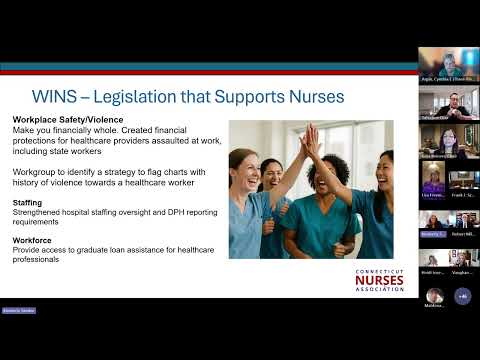
At a June 3 meeting of the Board of Examiners for Nursing, Kimberly Sandor of the Connecticut Nurses Association summarized 2026 legislative actions that aim to improve workplace safety, require more granular hospital staffing reporting, and create a state graduate loan assistance program for health professionals.
Kimberly Sandor, executive director of the Connecticut Nurses Association, told the Board of Examiners for Nursing on June 3 that this year’s legislative session produced a string of measures she described as “wins” for nurses and patient safety.
Sandor highlighted a worker-comp bill she said will make nurses financially whole after injuries caused by workplace violence and remove the need for staff to use paid time off to recover. She also described plans to form a work group this summer to develop a method for flagging patients who have previously committed violence against providers, and to explore how to share that information through the state's health information exchange so frontline nurses are better informed.
The association executive said lawmakers also passed a bill to strengthen oversight of hospital staffing plans by requiring unit-level reporting that DPH will collect and publish, a change Sandor and others said will hold hospitals to more specific staffing accountability. Sandor called another state initiative “one of a kind” nationally: a graduate loan assistance program to offset the consequences of a federal rule change affecting graduate-professional loan eligibility, which she said steps in where federal relief left gaps starting July 1.
Sandor said one proposed change that would have permitted consent orders to bypass the board was withdrawn after association and DPH concerns, and that a separate proposal to expand unlicensed personnel medication administration failed this year. She urged continued involvement from practicing nurses and patient representatives in forthcoming working groups and implementation discussions, saying the legislature’s work sets new reporting and oversight expectations but many details will be settled in rulemaking and agency reporting.
"We did have a number of wins," Sandor told the board, citing workplace safety and the graduate loan assistance as notable outcomes and thanking DPH and nursing members for partnership.
Why it matters: Several items — unit-level staffing reporting and policies about workplace violence — change what hospitals must report to DPH and how nurses on the floor will be informed about safety risks. The board’s members said they want to stay engaged as agencies and hospitals implement new reporting requirements and as task forces draft guidance.
Next steps: Sandor said the association plans to launch targeted work groups this summer and to continue legislative advocacy next year on issues that did not pass.