Get Full Government Meeting Transcripts, Videos, & Alerts Forever!
Get email alerts on the Renewable Energy topic
No spam. Unsubscribe anytime.
Renewable-energy ordinance sparks debate; data‑center moratorium proposed and work session set
Summary
Supervisors and citizens traded sharp views on a draft renewable-energy ordinance and whether to impose a moratorium on data centers. Business and community leaders urged economic‑development coordination with utilities; board scheduled an open work session for June 9 to continue the discussion.
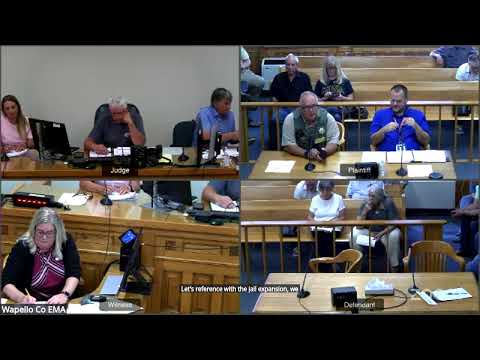
A draft renewable‑energy ordinance that would govern wind, solar and battery storage drew extended public comment and heated board debate at the Wapello County Board of Supervisors meeting.
A supervisor moved to place the ordinance on a public‑hearing calendar in two weeks, but another supervisor objected, saying the draft permits a high theoretical number of wind turbines while offering little for solar or battery storage. That objection left the motion without a second and the board did not immediately schedule a public hearing on the ordinance.
Mark Row, executive director of Greater Partners in Progress, urged the board not to impose a moratorium on data centers and said the county should coordinate with utility partners and economic development because decisions about data centers hinge on electrical and gas infrastructure. "I would encourage you to really think hard about the word moratorium and data centers," he told the supervisors, saying a moratorium could push potential projects away.
Other residents urged action rather than delay. One resident who said he had installed solar at his home told supervisors the county should adopt a workable ordinance now and revise it later if needed. Questions from residents included where turbine blades are disposed when they wear out and how county tax revenue from utility projects would be realized; staff answered that blade disposal practices depend on operators and ordinance language and that tax revenue accrues to landowners and the county (assessment rules were summarized later in the meeting).
Board members agreed to schedule an open work session to discuss the ordinance and infrastructure partners; staff and several members proposed an open meeting at 10 a.m. on June 9 to allow public input and to invite utility representatives and city officials to join the conversation.
No moratorium was adopted at the meeting; the discussion remained at the study and planning stage.