Get Full Government Meeting Transcripts, Videos, & Alerts Forever!
Get email alerts on the Metering Incident topic
No spam. Unsubscribe anytime.
Tequesta staff report 60 meters misconfigured after AMI rollout; council to consider not back‑billing customers
Summary
Village staff told council that about 60 AMI meters were communicating in a 1,000‑gallon resolution instead of one‑gallon; Cornmine declined financial assistance, and council directed staff to return with a resolution recommending not to back‑bill affected customers, while staff implements vendor training, an installation checklist and monitoring reports.
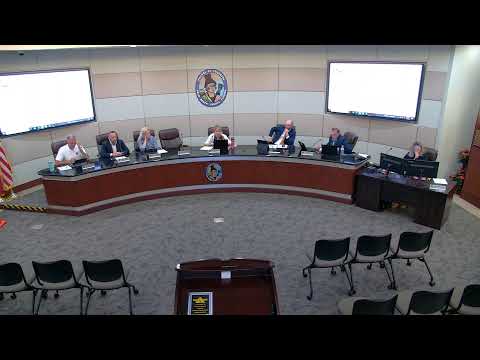
During the June 1 workshop, Utilities Director Allison Berg described an Advanced Metering Infrastructure (AMI) configuration error that affected roughly 60 customer meters. Cornmine (the meter vendor) reported the issue March 17 and staff corrected meter resolution settings March 19. Because some meters were returned from vendor service in their pre‑AMI (1,000‑gallon) configuration, a subset of customers received lower bills than actual usage until correction.
Allison Berg outlined three remediation options for the council: 1) back‑bill affected customers at their applicable stepped (tiered) rates — staff estimated roughly $94,000 in recovered revenue over one year and a maximum single bill of about $30,140; 2) back‑bill at the lowest tier (≈ $33,200 recovery; max ≈ $10,227); or 3) absorb the revenue loss and not back‑bill. The village’s legal authority allows back‑billing for up to one year for utility accounting errors. Cornmine declined to provide direct financial compensation but offered vendor training, a meter‑installation checklist and to return meters in the correct resolution going forward.
Council debate split along accountability and affordability lines. Some council members argued customers should pay amounts they used; others said low‑income and seasonal residents could be harmed by retroactive charges and that Cornmine shared responsibility. After discussion, council asked staff to draft a resolution recommending not to back‑bill the customers and to return it for formal action. Staff also will pursue corrective measures including: regular reports to identify accounts with no usage or incorrect resolution, a meter‑installation checklist integrated into work orders, and vendor training to prevent recurrence.
Representative quote: Utilities Director Allison Berg said, "Cornmine notified us on March 17 and by March 19 we had corrected the affected meters; they have declined to provide financial assistance but will provide training and process fixes."
Staff estimates and next steps: staff estimated the highest individual corrected bill would be about $30,000 in the tiered scenario and noted nine accounts would exceed $1,000; they advised council that payment plans could be offered if back‑billing were approved. The council did not adopt a final billing policy at the workshop; it directed staff to bring a resolution against back‑billing to a future meeting for a vote.