Get Full Government Meeting Transcripts, Videos, & Alerts Forever!
Get email alerts on the Housing Zoning topic
No spam. Unsubscribe anytime.
Staff proposes zoning changes, targeted pilot area to comply with Texas law on manufactured homes
Summary
City planning staff outlined options to comply with Texas Senate Bill 785, proposing a new R3M district that would allow HUD-code manufactured homes by right in selected areas, and recommended neighborhood meetings and a pilot zone change for Millard's Apple Park before the Sept. 1 compliance deadline.
Nacogdoches City staff on June 2 laid out a plan to bring the city's zoning into compliance with Texas Senate Bill 785, proposing a new R3M zoning district, targeted future land-use map changes and neighborhood outreach before the law's Sept. 1 effective date.
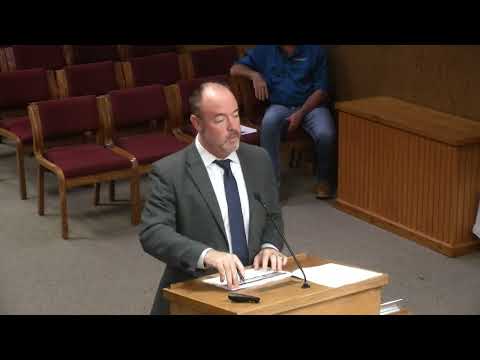
Mike New, the city's executive director of development and infrastructure, told the council the statute requires municipalities with zoning to allow HUD-code manufactured homes as a by-right use in at least one residential district and restricts the use of specific-use permits for these homes. "It requires municipalities with zoning to permit HUD-code manufactured homes as a by-right use," New said during his presentation, summarizing the bill's core obligations.
Why it matters: staff said the change responds to statewide housing supply pressures and a local affordability gap. New cited state estimates that roughly 320,000 additional housing units are needed statewide and told council staff research indicates about 44% of Texas cities with zoning will need to update ordinances. He said Nacogdoches's median household income (American Community Survey 2023) is about $38,855, making more-affordable housing types relevant to many residents, including students at SFA.
What staff proposed: the presentation narrowed possible zones to R2 and R3 and recommended creating a new mixed-residential district called R3M that would allow single-family, two-family (duplex) and HUD-code manufactured homes by right (but not extend those permissions to the city's R4 multifamily district). New described three implementation steps: amend the future land-use map to identify suitable areas; adopt a new zoning district (R3M); and initiate targeted zone-change requests, starting with Millard's Apple Park subdivision as a pilot location.
Technical and durability standards: staff and Building Official Don Shoemaker discussed construction standards and financing implications. Shoemaker noted recent HUD standard updates and described how treating a manufactured home as part of the real property (permanent foundation guidance) affects appraisal and financing. "HUD did upgrade their standards," Shoemaker said, noting changes to wiring and plumbing requirements that align manufactured homes more closely with modern construction.
Limits and safeguards: staff emphasized they intend to be strategic and to avoid arbitrary map changes. New said the approach favors "infield" development where manufactured homes already exist and highlighted existing exemptions such as historic overlays and private deed restrictions. The presentation noted more than 70 privately owned lots currently hold specific-use permits allowing manufactured homes on single lots in the city.
Legal and process caution: City attorney Cherry told the council adjoining property owners could object to zone changes and described notification and supermajority thresholds that could apply, calling potential legal challenges possible depending on implementation. Cherry said such challenges could include inverse-condemnation claims if property rights are altered without proper justification.
Next steps and council direction: staff recommended two neighborhood meetings (one focused on a proposed zone change for Millard's Apple Park and one general community meeting on the comp-plan and mapping changes), followed by planning-and-zoning and council hearings. Staff and several council members stressed the need to have an ordinance in place before the statute's Sept. 1 implementation date. Council members agreed to proceed with notifications to schedule at least two meetings and to continue refining details with staff prior to formal action.
What didn't happen: the workshop was for discussion only; no ordinance was introduced and no formal vote was taken. Staff said any zone change would follow the city's standard application, notice and hearing procedures before planning-and-zoning and council action.
The council adjourned the workshop and moved on to its regular meeting scheduled for 5:30 p.m.