Get Full Government Meeting Transcripts, Videos, & Alerts Forever!
Get email alerts on the Housing Development topic
No spam. Unsubscribe anytime.
Equity council tables recommendations on two downtown housing pilot agreements after questions over terms and teacher set‑aside
Summary
Fayette County Equity Council heard presentations on two IRB‑backed pilot proposals — Related Affordable’s preservation of Rose Tower and a 258‑unit Midland mixed‑use workforce housing project — and voted to table recommendations to the school board while members collect follow‑up information on ownership, financing timelines, affordability details and teacher set‑asides.
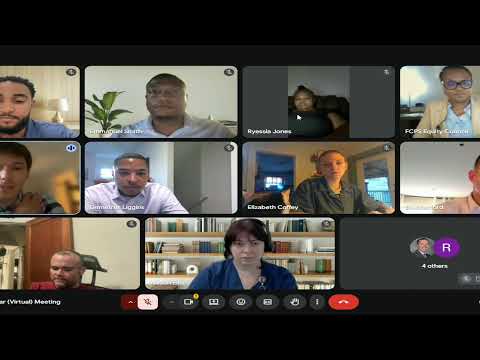
Developers seeking pilot agreements tied to industrial revenue bonds (IRBs) presented two downtown housing projects to the Fayette County Board of Education Equity Council on June 2, but the council tabled a formal recommendation to the board pending more information.
The council heard Related Affordable’s proposal to acquire and preserve Rose Tower Apartments, a 168‑unit, predominantly senior property. Sam Sjoberg of Related Affordable said 120 units already benefit from project‑based Section 8 and that, “at closing, we would renew that project‑based rental subsidy for a period of 20 years,” preserving the subsidy and adding 30‑year deed restrictions to the 48 market units if the developer secures tax‑exempt bonds and 4% low‑income housing tax credits from the Kentucky Housing Corporation (KHC). Related estimated roughly $9–9.5 million in renovation hard costs and proposed a year‑one pilot payment to the school district of about $65,000 with an end‑of‑term true‑up clause intended to protect the district’s revenue over the leaseback term.
Developers also presented a 258‑unit mixed‑use workforce housing project at Midland and Winchester, represented by Scott Shapiro and Andrew Ganahl. Shapiro said the city’s IRB framework requires projects to meet public‑value criteria and that at least 20% of units would meet workforce affordability (80–120% AMI). Andrew Ganahl said market rents in new construction would likely “start around the $1,500 a month point and go up to 2,500 or so for a 2‑bedroom,” and the developer proposed a $300 monthly discount for five early‑career Fayette County Public School employees, with interest in expanding that set‑aside.
Council members raised multiple substantive questions during the discussion: whether Related already owned Rose Tower (developers said they hold an acquisition option that will not be exercised without a tax/pilot agreement), whether the projects require IRB/pilot support to be financially viable, how pilot payments compare to projected taxes over pilot terms, the administration and eligibility of the teacher discount, traffic and neighborhood impacts, contractor selection and compliance with KHC and HUD requirements.
Sam Sjoberg warned the council that the Rose Tower financing is tied to KHC timelines: the application was submitted at the end of May and awards are expected by late July, creating pressure for timely council and board input. Developers repeatedly emphasized that the projects are intended to preserve or produce housing the city would otherwise not have and that relocation costs for residents during renovation would be covered by the developer.
After discussion, a council member moved to table both pilot recommendations to allow ECC members time to assemble additional questions and receive written answers; the motion was seconded and carried. Council members and the presenters agreed on a follow‑up cadence: ECC members will submit questions (requested by Friday) and answers will be compiled and shared publicly in advance of the school board’s planning meeting.
What’s next: The Equity Council’s tabling means the council will not forward a formal recommendation to the school board at this meeting; the board may take up the pilots after ECC questions are answered and the board’s own review process. Related Affordable and the Midland developers said they are amenable to additional conditions for community benefits (for example, expanding the educator discount or formalizing a partnership with a nearby school program) but cautioned that large changes to set‑asides could affect pilot payment calculations and project feasibility.
Quotes from the meeting
"At closing, we would renew that project‑based rental subsidy for a period of 20 years," Sam Sjoberg said, describing the Section 8 contract for Rose Tower.
"We're offering a $300 discount, for 5 teachers, in the program," an Andrew Ganahl representative said when explaining the proposed educator set‑aside for the Midland project.
Ending
The council’s action to table gives members time to gather more precise financial comparisons, compliance details, and options for expanding educator and community benefits before deciding whether to recommend the pilots to the school board.