Get Full Government Meeting Transcripts, Videos, & Alerts Forever!
Get email alerts on the Zoning And Land Use topic
No spam. Unsubscribe anytime.
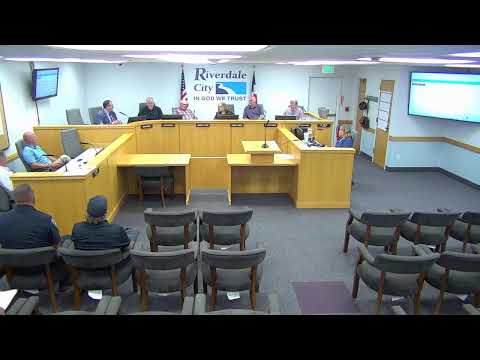
Riverdale council adopts process to classify new business uses, tables proposed bar at Ruby River site
Summary
Council unanimously adopted an ordinance implementing Utah Code 10‑2‑507 to classify new or unlisted business uses; a separate application to permit a bar/entertainment venue at the Ruby River site drew safety and land‑use concerns and was tabled for further conditions and a staff/council work session.
Riverdale’s City Council on June 2 adopted a new procedure to classify "new and unlisted" business uses in the municipal zoning code and postponed action on a high‑profile application that would add a bar/entertainment venue to the city’s C3 commercial zone.
The council voted 4–1 to approve ordinance 1009, the text amendment that implements a two‑step process required by Utah Code section 10‑2‑507: first a director‑level review to see whether a new use aligns with existing uses, and then referral to the legislative body within 60 days if staff finds no close match. Mr. Cooper, city staff, told the council the amendment mirrors the statute and will let the city fold truly new commercial uses into the zoning code without ad hoc patchwork.
Why it matters: the new process is intended to give staff and the council a clear, uniform mechanism to consider business models not captured in current land‑use tables, which staff said will speed decision‑making and provide clearer expectations to applicants.
The ordinance vote came the same night the council considered an application from Dr. Nesbet to classify a "bar" use at the existing Ruby River steakhouse facility. Dr. Nesbet described the proposed venue—branded informally as "Ebenezer's"—as a mixed facility with a higher‑end restaurant component plus entertainment, pool tables, a dance floor and mechanical bulls, and said alcohol service was a necessary revenue element. "If you don't have any alcohol, you can't make it work," he told the council, arguing the venue would be family‑friendly and tightly managed.
City staff warned the council that state licensing distinguishes a full liquor "bar establishment" from a restaurant based on whether patrons can obtain drinks without a predominant food focus; staff said the applicant's model, which would allow people to circulate with drinks, aligns with a bar license and thus requires a defined use in the zoning code. Mr. Cooper said the council must decide whether bars are a permitted or conditional use in C3 before any local consent licensing would follow.
Public safety and land‑use concerns drove the debate. Police Chief Warren urged caution: "I don't want a lot of bars in our city," he said, recommending any exemption be a conditional use with strict conditions—limits on capacity, mandatory private security, and a chief‑enforceable suspension mechanism if problems arise. Council members and staff discussed options including one‑per‑population limits, hours restrictions and distance buffers from community assets.
Outcome and next step: Rather than approve a bar classification, the council voted 4–1 to table the application and directed staff to draft ordinance language and site‑specific conditions for a conditional‑use approach. Council members asked staff and police to meet with applicants and to hold a pre‑meeting work session before the next regular council meeting to craft enforceable conditions.
What’s next: The ordinance 1009 text amendment is in effect immediately; the council will revisit the specific classification and any C3 conditions after staff prepares draft language addressing the council’s public‑safety and density concerns.