Get Full Government Meeting Transcripts, Videos, & Alerts Forever!
Get email alerts on the Data Centers topic
No spam. Unsubscribe anytime.
Residents urge Opelika council to pause data-center development, cite water and health concerns
Summary
Multiple residents urged the Opelika City Council on June 2 to adopt a moratorium or stronger local rules on data centers, citing potential heavy water use, noise, emissions and declining property values; speakers suggested conditional-use permits, reporting requirements and public engagement as options.
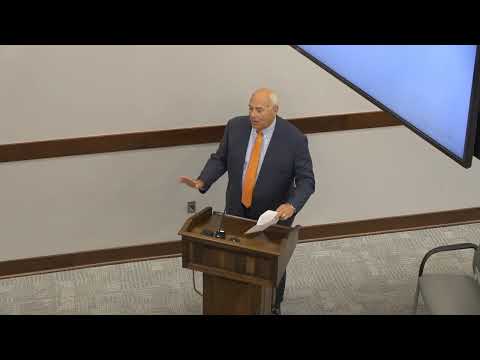
At the June 2 Opelika City Council meeting, several residents urged elected officials to take proactive steps on data-center development, including a possible moratorium and new local requirements to protect water resources, public health and neighborhood property values.
Sue Ellen Tixson, a resident who spoke during the meeting’s public-comment period, asked the council to "place a moratorium on data centers," saying the local risks outweigh the projected local returns. She said companies often promise minimal water and pollution impacts but that, across the region, those promises have sometimes gone unmet. "They have a track record of breaking all those promises," Tixson said, arguing that communities should not rely on developers’ assurances alone.
Tessa Talixson urged the council to produce an "action plan" and a substantive public-engagement process so concerned residents feel heard. "Each of you is a protector and a guardian of our community," she said, asking for clear protections so residents can continue to live and age in Opelika.
Dustin Howard offered a menu of policy tools the council could consider, drawn from measures other localities have used: moratoria or temporary pauses on new approvals; conditional-use permitting with ongoing enforceable conditions; zoning and municipal-code amendments; requirements for reporting and transparency (including water-use reporting); stronger noise mitigation and emissions controls; and limits on incentives or tax breaks. Howard cited examples and large-order figures discussed during his remarks, saying these controls can be written into permitting so conditions can be enforced over the life of a project.
Speakers pressed specific environmental and infrastructure concerns. In the meeting record, Howard stated that "a large data center can use up to 5 million gallons of water per day," and warned of on-site diesel-generator emissions and sustained noise if mitigation is not strictly enforced. Commenters also raised potential property-value impacts on homes bordering data-center sites.
Council did not take formal action on the requests during the June 2 meeting. No member announced a moratorium or introduced an ordinance; the public comments were received for council consideration. The meeting record shows the council may use future meetings or work sessions to follow up if it chooses to pursue regulatory changes.
The public-comment thread ended without a council vote on regulations; residents asked the council to consider options including conditional-use permits that can include reporting, monitoring and revocation mechanisms if conditions are violated.
Next steps: the council did not adopt any ordinance or resolution related to data centers at the June 2 meeting. Speakers asked for a clear timeline and a community-engagement process if the council intends to explore rules or zoning changes.