Get Full Government Meeting Transcripts, Videos, & Alerts Forever!
Get email alerts on the Public Health topic
No spam. Unsubscribe anytime.
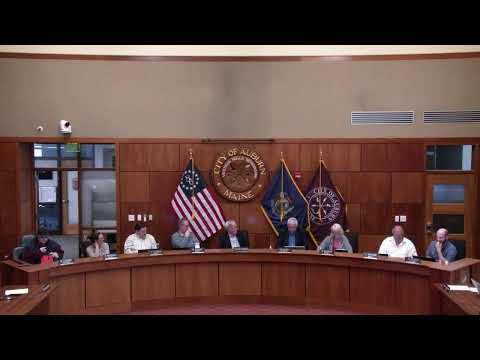
Auburn council reviews draft syringe service ordinance, debates school buffer, vetting and limits
Summary
At a June 1 workshop the Auburn City Council reviewed a draft ordinance requiring state certification for syringe service programs and adding local rules — including visible staff ID, expanded background checks, site buffers and a two‑provider cap — and scheduled first reading for June 15.
Auburn councilors spent a June 1 workshop scrutinizing a draft ordinance that would regulate syringe service programs (SSPs) in the city, adding local limits and oversight on top of the state program the draft relies on.
City staff told the council the ordinance is designed to rely on the state CDC rules (identified in the workshop as Chapter 252) for core certification, reporting and inspection standards, while imposing city-level requirements the state does not include. The draft would require operators to be certified under the state program and would add city requirements including owner and operator disclosure, floor plans for brick‑and‑mortar sites, visible staff and volunteer ID, sharps disposal containers at fixed and mobile sites, daily litter inspections within 250 feet of sites, and more detailed application information about populations served and staffing.
Why it matters: supporters said the extra rules are intended to give city officials and neighbors tools to monitor operations and respond quickly to problems, while opponents and some councilors said the additional rules may keep legitimate operators from serving clients and could push services out of convenient locations.
Key additions in the draft
- Certification and reliance on state rules: the city would require SSP operators to hold state certification and follow the state program’s reporting and inspection regime rather than re‑stating those rules in full. - Local operation rules: the draft adds more extensive business and ownership disclosure, floor plans for brick‑and‑mortar sites, staffing and security provisions, and visible staff/volunteer identification. - Buffers and zoning: brick‑and‑mortar and mobile sites would be limited to specified commercial zones (GB1, GB2) and excluded from residential zones; the ordinance creates a 250‑foot setback from schools for brick‑and‑mortar and mobile sites (the state rule restricts delivery within 1,000 feet of schools). - Delivery and mobile operations: the state allows delivery within an operator’s declared operating area but bars delivery within 1,000 feet of schools; staff said delivery and mobile operations typically serve outreach needs rather than routine door‑to‑door service. - Background checks: the draft extends the criminal‑history lookback for qualifying convictions to 10 years for applicants and requires checks for most staff and volunteers (with limited exceptions for intermittent volunteers under direct supervision). - Operational caps and hours: the ordinance would cap active certified SSPs to no more than two at any time and set operating hours (proposed in the draft as 7 a.m.–7 p.m. Monday–Saturday, 1–5 p.m. Sunday).
Council debate and public concerns
Councilors repeatedly raised constituent concerns about loitering and litter near SSP sites. Several councilors pressed staff on enforcement procedures, asking how a complaint within the 250‑foot buffer would be investigated and what remedies the city would have if neighbors continued to report problems.
Staff described enforcement as part of the city’s existing business‑license enforcement process: complaints would go to code enforcement for investigation; if a violation is found the clerk could act under business‑license rules and any suspension or revocation could be appealed to the council.
Councilor Adam Platt, who said he supports the school‑distance protections, framed the neighborhood worry this way: “I can only liken it to the industry that I know… ‘Sorry, there’s nothing we can do. It’s treated just like a massage parlor.’” He urged clearer standards to give the city more immediate remedies if repeated neighborhood complaints arise.
Hiring and background‑check concerns
Councilors also asked whether a 10‑year conviction lookback would make it harder for nonprofits to hire peer‑recovery staff. Staff advised the council that federal and state rules require a nexus between the conviction type and the job duties (the city can limit the inquiry to convictions related to controlled substances or violence) and that those legal limits constrain how background checks may be used.
Delivery, mobile sites and buffers
Several councilors asked whether other child‑serving facilities — such as the PAL center and after‑school programs — should be treated like schools for setback purposes. Staff warned that adding many different buffer categories could effectively exclude most of the city from potential sites; they recommended using existing “safe zone” GIS layers (already maintained for other regulated activities) for consistency. The council directed staff to produce a 250‑foot map for review and noted the option to amend the ordinance later once applications and operating plans are received.
Process and next steps
Staff said the draft ordinance will be on the council agenda for first reading on June 15. Councilors suggested the city monitor the first round of applicants and data reports and be prepared to amend the ordinance if practical issues arise. The draft includes reporting and inspection rights for the city and requires operators to provide to the city the same monthly data they send to the state.
Who spoke
Council members who questioned the draft included Councilor Rachel Randall and Councilor Adam Platt; staff presenting the draft included community development staff and the city manager. The full council, city staff, and several members of the public participated in the workshop discussion; no formal vote on the SSP ordinance occurred at the workshop.
What’s next: the ordinance is scheduled for first reading June 15, 2026. The council asked staff for a map showing the 250‑foot school buffer and for follow‑up on background‑check implications for hiring peer‑recovery staff.
Sources: Auburn City Council workshop discussion and staff overview on June 1, 2026.