Get Full Government Meeting Transcripts, Videos, & Alerts Forever!
Get email alerts on the Historic Preservation topic
No spam. Unsubscribe anytime.
Planning board finds Mount Zion landmark nomination and railroad-bridge district not inconsistent with master plan
Summary
The Millburn Planning Board voted unanimously June 3 to find two ordinances—one nominating the Mount Zion African Methodist Episcopal Church as a local historic landmark and one designating a thematic historic district of railroad bridges—not inconsistent with the township master plan; the board recommended a technical correction to the bridges nomination.
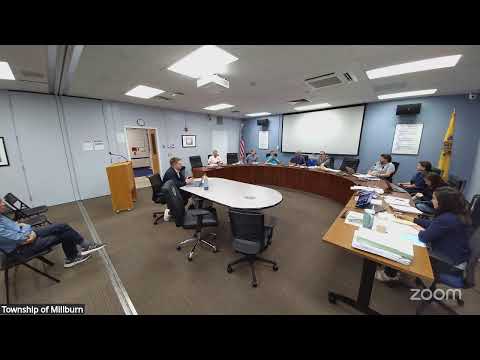
The Millburn Township Planning Board on June 3 recommended that two ordinances designating local historic resources be transmitted to the governing body after finding both not inconsistent with the township master plan. The board's staff presented a combined consistency review of ordinance 2754-26, which nominates the Mount Zion African Methodist Episcopal Church at 54 Church Street as a local historic landmark, and ordinance 2755-26, which would create a thematic historic district for bridges along the Morrison, Essex/Old Main/Delaware, Lackawanna & Western rail line.
The staff memo, read into the record by Graham, noted the Mount Zion congregation has records dating to 1881 and the existing church building dates to 1902, and it tied the nominations to master-plan preservation goals that encourage restoration and safeguarding of cultural and architectural resources. "The district and landmark nominations advance master-plan objectives to recognize and encourage preservation of area structures and sites of historic interest," Graham said in his oral summary to the board.
Board members asked whether the railroad designation would impede routine repairs or future development adjacent to the bridges. Graham replied the bridge-level designation would require historically appropriate materials and repair methods where possible, but would not, on its own, extend regulatory controls to unrelated off-site private property; many of the bridges and associated rights-of-way are owned by New Jersey Transit, he said.
Members also identified a technical discrepancy between the nomination report and the ordinance text over which bridge is listed as the "key contributing" structure. The report identifies the Main Street railroad bridge (item 6 in the consultant report) as the key contributing structure, while the draft ordinance lists a different bridge (number 7). A board member said the inconsistency should be reconciled before the ordinances are forwarded to the governing body.
After discussion, the board voted by roll call to make the formal consistency determinations. The board recorded unanimous "yes" votes on both motions and adopted the standard resolution to transmit the board's findings to the governing body for final action.
The board's action is procedural: the planning-board determination addresses only whether the proposed ordinances are consistent with the township's master plan and does not itself enact the designations. The governing body will consider the ordinances and any edits recommended by the planning board before final adoption.
What happens next: the planning board's consistency-report and recommended corrections will be sent to the governing body; the governing body will review and may adopt the ordinances, amend them, or request additional information.