Get Full Government Meeting Transcripts, Videos, & Alerts Forever!
Get email alerts on the Public Safety topic
No spam. Unsubscribe anytime.
Springfield officials outline Drone-as-First-Responder pilot, address privacy and oversight
Summary
City officials and state partners presented the ODOT-funded Drone-as-First-Responder pilot, described vendor selection of Brink hardware, operational benefits (sub-minute deployment, thermal imaging) and civil-liberties safeguards including no facial-recognition and public flight logs.
Springfield City Commission members heard a work-session briefing on a Drone-as-First-Responder (DFR) pilot that state and local officials say will speed first-response situational awareness and improve firefighter and officer safety.
Tom Franen, assistant city manager and economic development director, told the commission the item builds on earlier approvals and an ODOT grant to bring a turnkey DFR system to selected municipalities. "We thought it was a good time to talk to you about the overall program and explain a little bit how we're going to operate it," Franen said, and introduced state and local presenters who organized procurement and training.
Rich Fox, director of the Ohio Department of Transportation UAS center, said the Ohio legislature appropriated funding for a statewide pilot managed by ODOT to integrate unmanned-traffic-management data and to standardize a deployable system. "Seconds count," Fox said, describing the program's purpose. He said the state selected eight municipalities (one withdrew), that six had procured systems and two were deployed in the field, and that vendors were vetted to be NDAA-compliant.
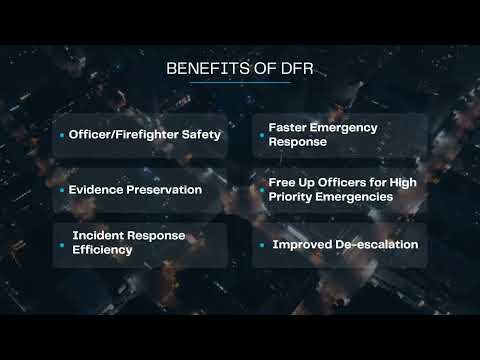
Locally, Assistant Chief Brian Leweski said Springfield currently operates eight handheld drones and has 18 Part 107-certified pilots. He described use cases where thermal imaging helped locate a gunman and where drones aided fire-scene water-supply placement and a missing-person search. Leweski said DFR units are expected to deploy automatically in about 45 seconds to a little over a minute, compared with current response times of roughly five to six minutes, which officials argued can reduce unnecessary large-unit dispatches and free personnel for higher-priority calls.
Commission staff described the procurement path that led to selecting Brink as the vendor for Springfield's DFR hardware and software after an RFP and interview process. Presenters played a Brink demonstration showing live-streaming video and the ability for multiple responders to view feeds in real time.
Franen and other presenters outlined hardware features: a self-contained, heated-and-cooled "drone in a box," an emergency-parachute system, two-way communications, thermal cameras, optical collision avoidance and an estimated flight time of about 42 minutes (weather dependent). The city’s initial DFR units were shown sited at City Hall and Fire Station 8; presenters also said the systems were being configured for interoperability with neighboring townships and for highway incident response.
Officials addressed civil-liberties and transparency concerns raised by the public and commissioners. "These are not going to be patrol drones," Franen said, adding they will be launched only for specified circumstances and will not be used to cruise city streets. He stated, "there is no facial recognition technology on it," and said the city will store video similarly to body-worn and in-car camera footage on cloud storage and that footage will be subject to public-record (FOIA) requests. Each flight will generate a transparency report and the team pointed to an example public portal used by another department where flight histories are visible.
Commissioners asked whether the DFR units could be used for preventative inspections (building tops, bridges) and whether responding apparatus could view live feeds. Presenters said handheld drones remain preferable for many preventative and inspection tasks because they allow flexible deployment and battery swaps; they said DFR feeds can be piped to iPads on engines and ladders and can support multiple simultaneous viewers.
Asked what would prevent misuse, presenters pointed to departmental policies, FAA-certified pilots operating the systems, recorded flights, and regular audits of flight logs. "Every flight of these drones is going to be recorded as well," Franen said, noting audits would reveal improper use.
The briefing described the state's role as reimbursing municipalities for equipment and operating costs after local purchase. Officials also said the program will collect operating characteristics to inform a legislative report and to contribute data to the FAA’s evolving unmanned-traffic-management framework.
The commission did not record a vote on equipment procurement in the transcript of this work session; the meeting concluded after a motion to adjourn, which carried on a roll call vote.
What’s next: officials said they are working to stand up the remaining pilot sites and to provide operating data for the statewide report; the team will continue to return to the commission with procurement and operational details as required.