Get Full Government Meeting Transcripts, Videos, & Alerts Forever!
Get email alerts on the Eviction Policy topic
No spam. Unsubscribe anytime.
New no‑fault rules change renewal timing: landlords, plan 120 days ahead, presenter says
Summary
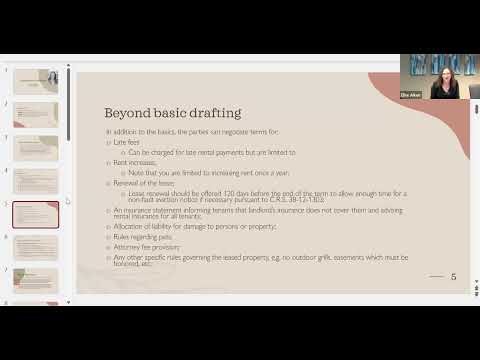
Presenter Elise Aken told attendees that Colorado’s no‑fault eviction and nonrenewal rules require longer advance planning for lease renewals: tenancies totaling more than one year trigger a 90‑day nonrenewal notice and landlords should offer renewals 120 days before term end.
Elise Aken explained the practical effect of Colorado’s no‑fault eviction and lease-renewal statutes and urged landlords to plan well in advance when they intend not to renew a tenancy.
Aken said the no-fault rules apply to a tenant’s total time in possession, not merely the length of a written lease. "If they've been there for more than a year, you are going to need to comply with the no fault eviction statute," she said, and landlords who want to move into the unit or pursue construction should provide the required 90 days' notice.
The presenter recommended offering lease renewals at least 120 days before the lease term ends so landlords have time to serve the statutory notice if tenants do not sign. She cautioned that simply changing a renewal to an 11‑month lease will not shield an owner from the statute if the tenancy as a whole exceeds one year.
Aken also described the categories that qualify for no‑fault nonrenewal: landlord or family move‑in, extended construction, and sale of the property (as summarized during the session). She noted that some properties and shorter tenancies remain exempt under specified statutory sections but emphasized landlords must confirm applicability before acting.
During Q&A, attendees asked whether the renewal rules apply to short written leases and Aken reiterated the same standard: the tenant’s total time in possession controls whether the no‑fault protections apply. The panel advised landlords to consult the FED filing forms referenced in court practice (JDF forms) and to seek legal review when planning a nonrenewal or relocation that might trigger the statute.
The webinar organizers said slides and a recording will be shared for reference.