Get Full Government Meeting Transcripts, Videos, & Alerts Forever!
Get email alerts on the Lease Drafting topic
No spam. Unsubscribe anytime.
Colorado landlords must add specific disclosures, but many common lease clauses are now void, presenter says
Summary
In a Fort Collins webinar, attorney Elise Aken reviewed Colorado rules requiring landlord contact and radon disclosures and warned that clauses penalizing eviction or waiving tenant rights are unenforceable under the updated statutes.
Elise Aken, a partner at the firm introduced in the webinar, told attendees that Colorado law now requires landlords to put certain disclosures and statutory notices directly into residential leases and that many commonly used lease clauses are void and unenforceable.
Aken said landlords must include the landlord or authorized agent’s name and address in the lease so tenants can provide proper written notice of habitability problems. She also advised attendees that the lease must include the statutory source-of-income nondiscrimination statement cited during the presentation.
Those required disclosures are separate from recommended drafting practices such as clearly listing the property description, term, named adult tenants and whether subletting is allowed. "The legislature has gone in and made sure that you're providing [tenants] with accurate contact information so they can provide you with that written notice," Aken said.
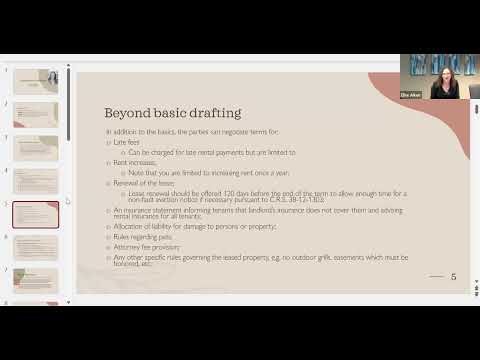
Aken warned that several types of clauses commonly inserted into leases are now expressly prohibited. She listed examples landlords cannot lawfully include: penalty provisions tied to eviction or posting demand notices, one-way fee-shifting clauses that give only landlords attorney fees, waivers of jury trial, waivers of class-action or collective claims, waivers of implied covenants (including quiet enjoyment and good faith), and attempts to waive mandatory mediation where the FED statute requires it.
She emphasized consequences: any lease provision that violates the statutory prohibitions will be found void and unenforceable, and courts may strike the clause. Practically, that could allow a tenant to refuse to comply with a noncompliant provision or to seek rescission of the offending clause.
Aken additionally cautioned that the consumer-protection statute and recent changes taking effect in January further restrict fees and charges landlords may pass to tenants. Her advice: avoid punitive or creative fee clauses and, when in doubt, consult counsel to review lease language.
The panel said slides and a recording of the session will be posted for attendees and encouraged landlords to update lease templates to reflect statutory requirements and to remove clauses that courts will not enforce.