Get Full Government Meeting Transcripts, Videos, & Alerts Forever!
Get email alerts on the Cannabis Regulation topic
No spam. Unsubscribe anytime.
Lake County supervisors continue public hearing on revisions to commercial cannabis rules after debate over setbacks, water and opt-out rules
Summary
Staff previewed revisions to Article 27 of the Lake County Code—removing suburban reserve from cultivation zones, adding a processing fee for opt-outs, and proposing a reduced-canopy framework—while supervisors and public commenters debated retail permit tiers, water monitoring, odor controls and a 25% reduced-canopy minimum. The board continued the hearing to June 23 for further edits.
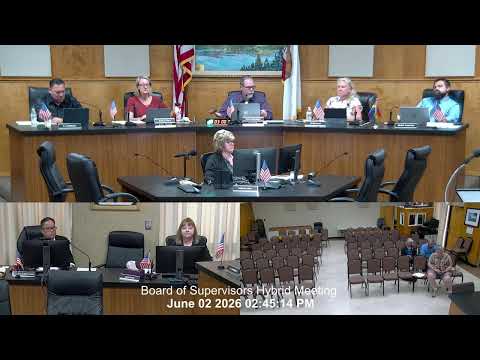
Lake County Board of Supervisors on Thursday continued a public hearing on proposed amendments to Chapter 21, Article 27 of the county code that would revise commercial cannabis regulations, after extensive public comment and questions from supervisors.
Director Turner of Community Development presented the latest draft and highlighted several substantive changes, saying the package "removes suburban reserve zoning district from options for cannabis cultivation" and adds new language to require a fee to cover Treasurer/Tax Collector processing of opt-out and reduced-canopy requests. Turner said staff had proposed a 25% floor for reduced canopy in a given reduced-canopy year as a starting point but remained open to direction from the board.
The proposed ordinance also includes technical corrections Turner said were identified in public comment and staff review, including clarifying acreage bands in the canopy table and fixing inadvertent deletions from the redline that could affect whether outdoor cultivation is allowed in Farm Production Zones (FPZ). Turner told the board he would request the first reading of the ordinance be scheduled at a later meeting so staff could incorporate those corrections.
Why it matters
The ordinance changes would alter where and how commercial cannabis operators may cultivate, process and sell products in Lake County. The discussion touched on several county priorities: protecting neighbors from odor and water impacts, preventing gaming of the opt-out process, and aligning local rules with state licensing and enforcement.
Key debates and public concerns
- Retail permitting: Supervisors questioned whether retail dispensaries should remain a minor use permit in C1/C2 commercial zones, or be elevated to a major use permit with a higher level of review. Supervisor Owen described retail as a “regulated substance” and said communities may expect local standards beyond state law; other supervisors expressed concern that a major-use threshold would be an unnecessary barrier to lawful retail.
- Reduced canopy and opt-outs: Staff proposed a 25% minimum cultivation threshold in reduced-canopy years as a baseline; several public commenters and supervisors supported a minimum to prevent operators from exploiting an opt-out as a loophole. At the same time, commenters and some supervisors warned that a rigid minimum could force financially struggling permit-holders to cultivate more than market demand supports. County staff and supervisors discussed alternatives: charge a fee to cover county processing and inspections for opt-outs, or amend longstanding permits after several years of consistent underuse (a model used in other counties).
- Water usage and cumulative impacts: Multiple public speakers, including nearby residents and farm operators, urged stronger monitoring of groundwater and well reports. Angela Emerald and others said they had seen instances where reported water use appeared to be understated, and urged that deviations beyond a set threshold (for example, 20%) trigger county review or enforcement.
- Odors and greenhouse ventilation: Commenters and supervisors pressed staff to clarify odor-nuisance language and how it applies to outdoor, mixed-light and indoor operations. One member of the public described prior litigation and said courts recognize odor as a legitimate cause for challenge; staff agreed the ordinance wording needed to be clarified so it does not conflict internally.
- Background checks and warrants: The draft would retain background checks (staff said checks remain limited to full-time employees) and include language allowing county action if an active warrant relevant to the permit scope is identified; County Counsel said staff could clarify the wording so the county relies on official law-enforcement notice rather than informal reports.
Public testimony
Attorneys who wrote to the board on behalf of Tom Lasik and Marggo Kambara argued the amendments are not categorically exempt from environmental review and should be evaluated under CEQA (as stated in public comment letters). Multiple speakers—including Holly Harris, Charles Morris, Tom Lasik, and farmers representing Family Farms—urged stricter water-reporting, stronger enforcement on misreported opt-outs, and protections for neighbors who have experienced odor and well impacts.
Board direction and next steps
Supervisors asked staff to correct inconsistencies between the redline and the underlying ordinance text, to return options for fee structures to cover opt-out/reduced-canopy processing, and to carry certain policy items over to a separate Article 73 update (which staff said will address issues such as FPZ boundary changes and hydrology in greater depth). Several supervisors signaled openness to alternatives—such as permitting amendments after a multiyear pattern of underuse—rather than a rigid countywide 25% floor.
Formal action
The board did not take final action on the ordinance. A supervisor moved to continue the public hearing to June 23 at 11:15 a.m.; the motion was seconded and the board voted for the continuance (motion carries; recorded vote 5–0).
What remains unresolved
Staff will return with corrected redline language that preserves required FPZ protections, clearer wording on odor standards and background-check notice mechanisms, options for a fee to cover opt-out processing, and possible permit-amendment approaches for long-term underuse. Article 73 will be used to consider related items such as countywide canopy caps, FPZ conversions and hydrology/groundwater provisions.
The public hearing will resume June 23 at 11:15 a.m., date and time certain, for a first reading and further board direction.