Get Full Government Meeting Transcripts, Videos, & Alerts Forever!
Get email alerts on the Budget School Finance topic
No spam. Unsubscribe anytime.
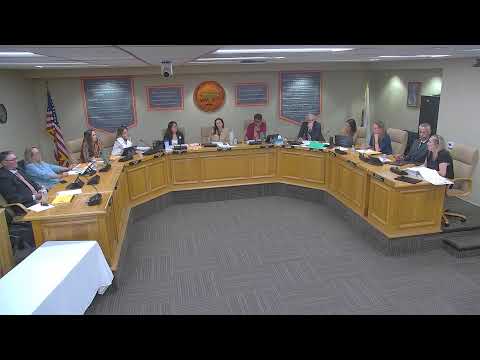
Atascadero Unified board hears budget outlook after May revise; public hearing opened and closed with adoption set for next meeting
Summary
Atascadero Unified Budget staff told trustees the May revise improved the district's fiscal outlook (higher COLA, new special-education funding and one-time grants) but cautioned against treating it as permanent. The board opened and closed a public hearing on the 2026-27 budget; formal adoption is scheduled for the next meeting.
Atascadero Unified School District officials presented a detailed review of the state's May revise and its implications for the district's 2026-27 budget, saying recent state revenue strength and proposed increases in the cost-of-living adjustment (COLA) and special education funding have improved the district's multi-year outlook while risks remain.
The district's budget lead explained the May revise shows "things really are better than where we thought they would be a few months ago," citing stronger tax revenue that produced a proposed COLA of up to 4.31 percent and additional special education allocations. The presenter and fiscal staff emphasized that some proposed funding is ongoing (special education increases), while other amounts remain one-time or are being held back pending final budget action at the state level.
Why it matters: higher COLA and special education investments reduce pressure on the district's unrestricted fund and could lower projected deficits, but the district must avoid creating ongoing obligations tied to one-time grants. The presenter underscored continued exposure to economic risks (market volatility, inflation and federal policy shifts) and said fiscal prudence and reserves remain necessary.
Board action and next steps: the board opened a public hearing on the 2026-27 annual budget and reserves and, after confirming no public requests to speak, closed the hearing. The budget will return to the board for adoption at the next scheduled meeting. Trustees asked for follow-up reports at the 45-day revise point when allocation details for some one-time and discretionary funds are expected.
Details and context: the presenter reviewed LCFF mechanics, noting that district funding depends heavily on average daily attendance (ADA). The district reported approximately 4,275 enrolled students and a funded ADA near 4,110 (about 93.8 percent attendance), which directly affects revenues. Staff also explained the difference between restricted grants (which must be spent for specified purposes and may appear to create a restricted fund deficit while serving strategic purposes) and the unrestricted general fund used for baseline operations.
Special education: staff described special education as a major cost driver statewide and locally; while new state proposals would increase allocations, the district still expects to contribute a substantial share of special education costs from unrestricted dollars. An estimated $2 million of additional state funding was noted as relieving pressure for the budgeted year.
Public oversight: the district reminded the public that one-time recovery grants should be used for temporary investments and that their spenddown is captured in the Local Control and Accountability Plan (LCAP).
The board will consider formal adoption of the 2026-27 budget and reserves at its next meeting after receiving updated allocations and the 45-day revised figures from the state.