Get Full Government Meeting Transcripts, Videos, & Alerts Forever!
Get email alerts on the Adu Policy topic
No spam. Unsubscribe anytime.
Moraga planning commission recommends ADU ordinance update to comply with state law after debate over design rules and amnesty
Summary
The Planning Commission voted 4–2 to recommend that Town Council adopt amendments to Chapter 8.124 to align local ADU/JADU rules with state law; commissioners split over removing some local design limits, front-yard setback exemptions for streamlined ADUs, and an amnesty path for pre-2020 unpermitted units.
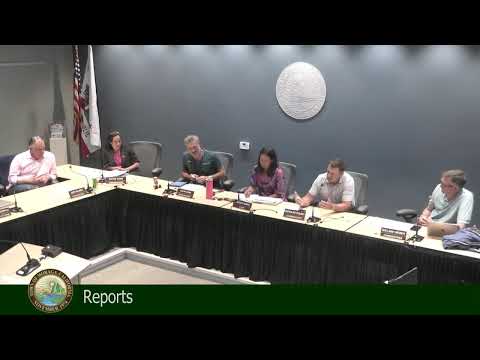
The Moraga Planning Commission on June 2 voted 4–2 to recommend that the Town Council adopt an ordinance amending Chapter 8.124 of the Moraga Municipal Code to bring the town’s accessory dwelling unit (ADU) and junior ADU (JADU) rules into alignment with recent state law changes.
Assistant Planner Casio Kandang told commissioners the update is primarily a compliance effort after the state Housing and Community Development (HCD) unit sent a technical assistance letter identifying local provisions that conflict with current ADU statutes. Staff recommended adoption of Resolution No. 4-2026 to restore an enforceable local ordinance and provide clear procedures for applicants.
Why it matters: state ADU statutes now limit local discretion on development standards and review processes for many ADUs, and HCD can press jurisdictions that do not bring their codes into alignment. The proposed ordinance updates definitions and application procedures, establishes an amnesty path for ADUs and JADUs constructed before Jan. 1, 2020, revises development standards (including when setbacks apply), clarifies parking and impact fee rules, and removes deed restrictions for ADUs where state law prohibits them.
Staff summary and data: Kandang said the town recorded about 57 ADU applications from 2017 to 2026 (roughly six per year) with an average ADU size of 687 square feet; 11 applications were filed in 2026 to date, seven of which were tied to a single development project in town. Kandang also noted that state changes have been phased in over several legislative cycles, with AB 68 (effective January 2020) and SB 9 (effective 2021) among the measures that reduced local discretion and expanded ministerial approvals.
Points of contention: commissioners were split over how much the town should retain design controls. Commissioner Rain expressed concern that vague or subjective design requirements could raise costs or unintentionally limit the use of modern, fire-resistant materials and modular construction that could increase housing supply. Rain urged staff to return with clearer, objective standards for standard ADUs so homeowners and staff can apply rules consistently.
Other commissioners warned that too much delay could trigger closer scrutiny from HCD’s Housing Accountability Unit. Commissioner Pski and others said the town must demonstrate timely compliance to avoid enforcement attention, and several commissioners argued the draft ordinance is legally defensible and balances state requirements with the town’s remaining local expectations.
Amnesty and safety: staff said the ordinance creates a pathway to legalize eligible pre-2020, non-permitted ADUs if they can be brought up to building-safety and habitability standards; fees would still apply. The town’s housing element directs staff to work on legalizing up to six unpermitted ADUs as part of that effort.
Streamlined vs. standard ADUs: staff clarified that ‘‘streamlined’’ ADUs—eligible for the most limited local development standards and ministerial review—are generally capped at 800 square feet. ADUs larger than 800 square feet (up to the statutory maximum) are treated as ‘‘standard’’ ADUs and are subject to objective design standards; non-complying applications may be referred to the Planning Commission for discretionary review.
Notice and outreach: commissioners asked whether notice had been broader than the required newspaper publication. Staff said notice for this item ran in the East Bay Times on May 13; commissioners encouraged the town to use additional town communication channels (newsletters, website summaries) to keep residents informed.
Vote and next steps: on a 4–2 vote the commission adopted Resolution No. 4-2026 recommending Town Council approve the ordinance (the motion incorporated a supplemental staff report submitted that afternoon). The commission recorded two no votes. The item will be scheduled for Town Council consideration (first reading June 24, second reading and adoption July 8), with the ordinance effective 30 days after adoption and submittal to HCD as required. Commissioners also asked staff to bring back recommended clarifications and objective design standards after the Council hearing.
Authority references: staff cited Government Code provisions that limit conflicting local ADU provisions and the CEQA guidance that exempts ADU/JADU ordinances from environmental review; staff noted HCD had contacted the town about compliance. The draft ordinance as presented would update Moraga Municipal Code Chapter 8.124 to reflect those requirements.
What’s next: the Planning Commission’s recommendation goes to the Town Council for decision. The Planning Commission requested staff return with potential objective design refinements and expanded outreach materials following the Council hearing.