Get Full Government Meeting Transcripts, Videos, & Alerts Forever!
Get email alerts on the Grant Process topic
No spam. Unsubscribe anytime.
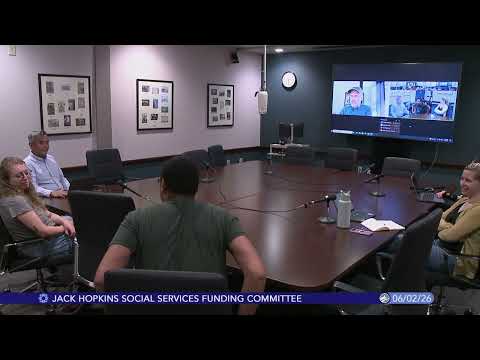
Jack Hopkins grant panel seeks tighter rubric, clearer budgets and more staff support
Summary
Members of the Jack Hopkins social service grant committee reviewed the recent grant round and recommended tightening rubric scoring, improving budget visibility in the application, and having staff produce a consolidated spreadsheet to speed and standardize review.
The Jack Hopkins social service grant committee debriefed its recent funding round, telling each other the new online application generally improved access to necessary information but left reviewers scrambling to locate budgets and reconcile score differences.
Committee members said the application layout was "an improvement" compared with prior years, but that budget attachments and the export workflow were difficult to use. Several members suggested adding a one-line budget summary at the top of each application so reviewers can quickly see the total request and major funding components. Multiple participants asked that staff or a fellow prepare a consolidated spreadsheet of applicant data before deliberations to reduce time spent hunting for information.
Why it matters: committee members said the rubric gave them a common comparator but did not always separate applicants because scoring ranges remained tight. "It gives us a common comparator," a committee member said, but "we should tighten up scoring for next year" so that the rubric more clearly distinguishes competing proposals.
The committee debated whether frequent follow-up interviews biased decisions. Some members argued interviews clarified application gaps and were helpful; others said inviting applicants in should not sway evaluators if the rubric is applied consistently. To address that tension, members proposed (a) tightening rubric criteria and scoring ranges, (b) reserving a second, short clarifying interview only for applications with unclear information, and (c) assigning subsets of reviewers to deep-dive topic areas (for example, housing, food insecurity, child welfare) so those reviewers can present expert summaries to the full panel.
Members also discussed whether to separate application tracks for new or innovative organizations and established applicants. One suggestion was to explicitly build a "community partnerships" or collaboration question back into the rubric and award points for clearly documented collaborative approaches to encourage joint projects.
Next steps: the committee recommended staff refine the rubric scoring guidance, explore a standard budget-summary field on the application form, and prepare a consolidated spreadsheet for next year’s review cycle. No formal motions or votes were recorded during the debrief.