Get Full Government Meeting Transcripts, Videos, & Alerts Forever!
Get email alerts on the Pride Flag Veto topic
No spam. Unsubscribe anytime.
Residents urge reversal after Boonton mayor’s veto of council’s pride-flag ordinance
Summary
Dozens of residents told the Boonton mayor and council June 1 that a mayoral veto of a recently passed ordinance to fly a pride flag at Grace Lord Park sends the wrong message about safety and inclusion; speakers urged the council to restore the ordinance and questioned the lack of a public explanation from the mayor.
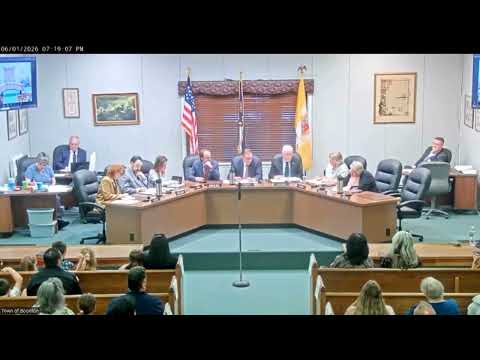
Mayor James Lynch’s veto of an ordinance authorizing the pride flag to be flown at Grace Lord Park drew sustained and emotional public comment during the Boonton Mayor and Town Council meeting on June 1.
At the start of the public-comment period multiple residents told the council the veto — referenced repeatedly by speakers as Ordinance 11‑26 — made LGBTQ+ members of the community feel unsafe. “The loud statement made by the mayor is that LGBTQ+ members of the community are not welcome and are not safe,” Cass Saladino said, criticizing what she called the mayor’s public position and urging the council to act. Michelle Lucky told the council the pride flag “means safety” and said flying it publicly would show support and reduce stigma.
Several speakers cited research and local experiences when arguing flying the flag saves lives and reduces bullying, suicide and hate crimes among LGBTQ+ youth. A speaker who identified as trans urged the council to reconsider, saying a rainbow flag is a simple, visible signal of support: “When a member of the community sees that flag, it can help them remember that their life is worth living,” the speaker said.
Others at the mic asked procedural and legal questions. One commenter recited First Amendment considerations and asked whether the town’s policy on non‑official flags had been applied evenly. A number of emailed comments read into the record also supported the ordinance and urged the council to override the veto.
The meeting transcript records widespread public sentiment in favor of flying the flag; however, the record does not contain a mayoral statement explaining the veto or any council motion to override it during the June 1 meeting. The transcript likewise does not specify next procedural steps, such as whether the council will schedule a veto‑override vote or whether the mayor sent a written veto explanation to the council. Those details were not shown in the meeting record and were listed as not specified in the town’s agenda materials read at the session.
Background and context: speakers said the ordinance at issue had been passed at a prior meeting and that the mayor exercised his veto power after that passage. Several commenters argued a mayoral veto is normally accompanied by a written explanation that would allow the council an opportunity to address objections or attempt an override; public commenters said no such explanation had been presented to the public at the time of their remarks.
What remains next: the council did not take a formal recorded vote to override the mayor’s veto during the June 1 meeting and made no public schedule for one. The council will need to consult the town clerk’s office or subsequent agenda postings to learn whether an override will be scheduled or whether the mayor has issued a written veto message.
Quote highlights from the public record: “Deliberately choosing to not fly it further perpetuates the deadly violence the community is experiencing,” Cass Saladino told the council during the public comment period. “The pride flag means safety,” Michelle Lucky said. “I will fly my pride flag in front of my home.”
Ending: The meeting closed after more than an hour of public comment on the issue; the transcript shows no further council action on the veto at that session.