Get Full Government Meeting Transcripts, Videos, & Alerts Forever!
Get email alerts on the Land Use Development topic
No spam. Unsubscribe anytime.
Swim school proposal near Montclair firehouse draws safety and parking objections
Summary
A proposed SwimQuest children’s swim school at 580 Valley Road drew extended testimony from the Montclair deputy fire chief, the applicant’s operator and a parking consultant about whether drop‑off traffic could block a nearby firehouse and whether nearby public parking can absorb business demand. The board continued the application to July 6 for further review.
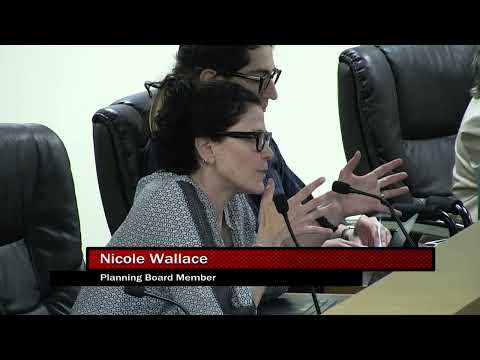
The Township of Montclair Planning Board heard more than three hours of testimony on June 1 over an application to convert 580 Valley Road into a SwimQuest children’s swim school, focusing on whether parent and staff parking would impede operations at the adjacent firehouse and whether nearby public lots can absorb peak demand.
Devin Stone, co‑owner of SwimQuest LLC, told the board the operation would run small classes — private and semi‑private lessons with a maximum of three pupils in some group formats — and operate weekdays roughly 9 a.m.–12 p.m. and 1–7:30 p.m., with Saturday hours 9 a.m.–2 p.m. “Most of our program is semi‑private to private lessons,” Stone said, and he said he would require employees to park off site rather than in the school’s 11 on‑site spaces. Stone also said the company uses third‑party weekly water‑quality testing and plans occasional weekend birthday parties (maximum 20 children) and community outreach lessons provided without charge through partner organizations.
But Deputy Fire Chief Michael Leisa told the board he had discussed a temporary accommodation with the applicant’s representative for shift change parking near the station and that those conversations had happened several times. Leisa described the arrangement as a convenience rather than a formal agreement and said the fire department relies on a rotating 24‑hour shift pattern that can produce 8–12 personal vehicles at shift change. “It’s a convenience for us,” Leisa said, but he warned that if cars stacked up in front of the station it would slow outgoing crews.
Residents described multiple incidents when vehicles in the Valley Road corridor slowed or blocked access to the firehouse, and they urged the board to require stronger assurances before approving the swim school. “Any delay that we have … is not ideal for us,” a resident who said she had experienced a fast response time in a past fire told the deputy chief. Public commenters repeatedly asked for a traffic study rather than a parking inventory, citing train‑gate backups, school‑dismissal activity, and preschool drop‑off patterns that can produce transient congestion.
The applicant’s traffic consultant, Matthew Seckler of Stonefield Engineering Design, presented a parking assessment based on field counts done in October 2025 and May 2026 and a preliminary survey in June 2025. Seckler said his team identified roughly 263 public on‑street and municipal spots within the closest walking distance and that, in several 20‑minute counting windows, there remained dozens of empty spaces in the nearest public lots. “We looked at over 600 spaces inside the five‑minute walk area, and focused on roughly 263 closest spaces that we believe are available to customers,” Seckler testified, adding that in a worst‑case scenario (an 18‑child peak class where every parent drove separately) the operation would need roughly 36 parking stalls and that the consultant’s counts showed some windows when the nearby public supply could meet that demand.
Critics pressed Seckler on sampling choices and interpretation. Board members and residents noted the counts were limited to a small set of days (October and May snapshots plus a preliminary June count), that the Belleview/ERIE lot includes NJ Transit permit spaces whose availability varies by weekday and hour, and that the May weekday count fell on a school early‑dismissal day that may understate typical demand. Seckler acknowledged those limits and the need to verify permit and transit lot availability with municipal parking staff and the board’s consultant.
The Planning Board did not vote on the application. The board and the applicant agreed to continue the hearing to July 6, 2026 so the township’s traffic consultant can review the parking study, the applicant can provide additional documentation of staff parking arrangements and any off‑site agreements, and the parties can clarify the status of transit/permit spaces cited in the counts.
What’s next: The board will receive a written review from its outside traffic reviewer and hear supplementary testimony at the continued hearing on July 6, 2026. The record will remain open for the applicant to provide confirmations about staff parking arrangements and any formal agreements with nearby lot owners.