Get Full Government Meeting Transcripts, Videos, & Alerts Forever!
Get email alerts on the Board Ethics topic
No spam. Unsubscribe anytime.
Wenham officials debate limiting one person from holding multiple municipal seats
Summary
Select Board members debated a pair of proposed warrant articles that would limit individuals from holding multiple seats on key town boards, weighing conflict-of-interest concerns against volunteer scarcity and practical recruitment limits.
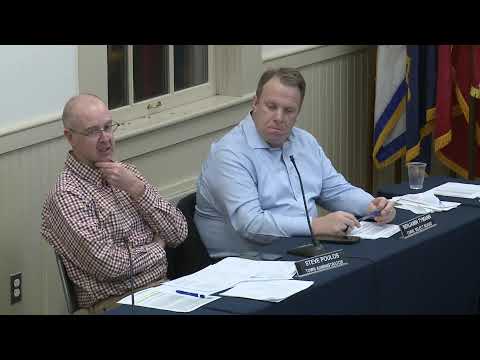
The Wenham Select Board on Feb. 3 discussed proposed warrant articles that would prevent a single person from serving simultaneously on multiple town boards, generating a lengthy debate about which bodies to include and how the rule would be enforced.
The board’s discussion, which continued into a joint session with the Finance Advisory Committee, was framed by Steve (town staff), who said the drafts include two parts: special legislation to restrict elected boards and a bylaw to limit service on other municipal bodies. "The intent of this article is to limit certainly elected officials from holding multiple seats," he said, explaining the draft would prevent one person from sitting on more than one of the key elected panels.
Why it matters: supporters said the change would reduce conflicts when one official advises or recommends matters and then votes to approve them on another body. "It's about avoiding the conflict of interest of a person on one board turning around and voting on what they just recommended," one member said. Opponents cautioned the town has a limited volunteer pool; several members, noting upcoming open seats, warned that too broad a restriction could make it harder to staff important commissions.
The debate centered on which boards to restrict. Candidates frequently mentioned for limitation included the Select Board, Planning Board, Zoning Board of Appeals (ZBA), and the Finance Committee (FINCOM). Some members argued that technical or specialist panels — for example, the Water Commission, Cemetery Commission, Conservation Commission, and the Affordable Housing Trust — should remain flexible because they require subject-matter knowledge.
Board members also discussed the school committee: because the regional school committee’s membership and governing agreement are outside the town’s unilateral authority, the proposed restriction would likely have to be structured carefully so it applied only where legally possible. Members also raised the board-of-health question: one select board member argued that excluding the board of health might bar otherwise qualified candidates who should be allowed to serve.
Practical next steps cited by staff and members included narrowing the list of affected bodies before finalizing warrant language, coordinating with Hamilton (where relevant), and seeking legal counsel about special legislation versus bylaw language. Several members proposed beginning with a limited set of policy-making boards rather than a townwide ban, and one recommended that recusal rules remain a fallback remedy where a dual seat already exists.
The board did not vote on the drafts at the meeting; members asked staff to return with clarified language and alternatives for which boards would be restricted and how the changes would be presented to voters at Town Meeting.