Get Full Government Meeting Transcripts, Videos, & Alerts Forever!
Get email alerts on the Ai Policy topic
No spam. Unsubscribe anytime.
Lawmaker proposes American AI Sovereign Wealth Fund Act to give public stakes in major AI firms
Summary
A lawmaker said they will introduce the "American AI Sovereign Wealth Fund Act," a proposal to impose a one-time 50% tax on stock (not profits) of the largest AI companies to create public ownership and place federal voting representatives on corporate boards; the speaker also accused tech firms of using creative works without permission or compensation.
A lawmaker said on stage that they will introduce the "American AI Sovereign Wealth Fund Act" in the coming weeks, a proposal intended to give the public a direct ownership stake in the largest U.S. artificial intelligence companies.
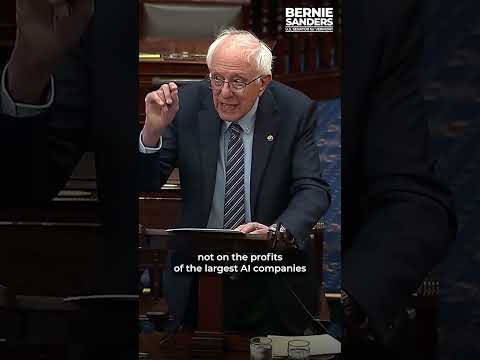
"In the coming weeks, I will be introducing the American AI Sovereign Wealth Fund Act," the Lawmaker said. The proposal, the Lawmaker said, would create public ownership by imposing "a one-time 50% tax not on the profits of the largest AI companies in the US, but ... the stock." The bill would also place federal voting chairs and "an equal representation on each company's board" to prevent corporate decisions that harm the public and to push for policies the speaker said would benefit citizens.
The announcement was framed by a broader critique of how AI systems are built. The Lawmaker said the foundation of modern AI is "our collective human intelligence" — "books, songs, artwork, journalism, computer code, scientific research, videos, conversations, images, and ideas spanning generations" — and accused large technology companies of using those materials "without permission, without acknowledgment, and without compensation." "The creative work of many millions of people ... has been stolen by the wealthiest people in the world," the Lawmaker said.
Details provided in the remarks include the one-time 50% charge on corporate stock (as described by the speaker) and placement of government representatives on company boards with voting authority and equal representation. The speaker described those governance mechanisms as ways "to block decisions that hurt the public and to push for policies that help them." The Lawmaker framed the proposal as corrective: "When a public resource generates wealth, the public should share in that wealth. In this case, artificial intelligence is being built on a public resource far more valuable than oil."
The remarks did not include sponsorship details, legislative text, or specific implementation mechanics such as how companies would be valued for the tax, how board representatives would be selected, or the legal authority for imposing such a tax. The Lawmaker said only that the bill would be introduced in the coming weeks; no committee referral, cosponsors, or timeline for floor consideration were provided during these remarks.
Next steps: the bill is a proposal announced verbally; it has not been filed, voted on, or otherwise acted on in any legislative body according to the transcript. Additional documentation and legislative text are needed to assess legal mechanics, constitutionality, and the practical effects of the proposed ownership structure.