Get Full Government Meeting Transcripts, Videos, & Alerts Forever!
Get email alerts on the Town Hall Renovation topic
No spam. Unsubscribe anytime.
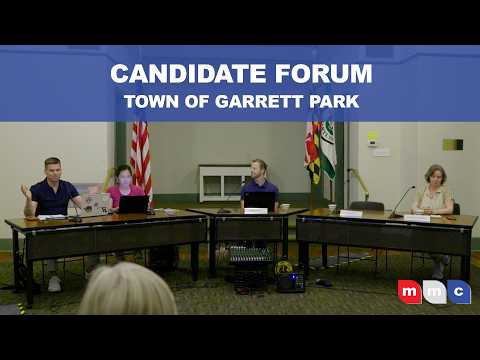
Garrett Park candidates defend $2.5M-plus town hall renovation, cite grants and required reviews
Summary
At a Garrett Park Citizens Association candidates forum, candidates said the town hall renovation design is largely set but construction will wait for contractor selection and a federally required environmental review tied to a new earmark; candidates defended higher commercial-code and historic-preservation costs and said grants reduce the town’s share.
Three candidates at the Garrett Park Citizens Association’s candidates forum on the 2026 ballot made the town hall renovation the evening’s most sustained topic, defending the project’s scope and explaining why the final cost and construction timing remain uncertain.
Lisa Max, a current Garrett Park council member and candidate for a second council term, said the renovation’s basic design is complete and the architect is preparing permit-ready plans, but added that the town must still select a general contractor and solicit subcontracts before final costs are known. “I’m excited about trying to bring in the town hall renovation on time and on budget,” Max said, noting her experience in construction and renovation.
John Stroud, a council member running for mayor, said staff had secured “some large sizable grants” that reduce the town’s out-of-pocket cost and that the project should not proceed with construction until federal environmental approvals are complete. “We did only recently get notice that we’re up for a federal earmark grant. That will require an environmental review and it’s really important that we don’t undertake any construction work until we get that approval,” Stroud said.
Why costs look high: candidates pointed to several factors that push the estimate above what a comparable residential renovation would cost. They said the project is being built under commercial codes (not residential codes), includes historic-preservation choices to restore the existing facade, and requires Americans with Disabilities Act upgrades that increase expense. “The bathrooms must be updated to Americans with Disabilities Act compliance and that also has a significant cost,” Stroud said.
Candidates also addressed reasons earlier maintenance choices increased scope. One candidate said sealed siding performed in a way that exacerbated interior rot, raising the level of repair needed. “Some of the deterioration of the siding…apparently has been exacerbated due to maintenance that caused rotting on the inside of the walls,” a candidate explained, saying that prior quick volunteer fixes sometimes create long-term costs.
On timeline, candidates gave only broad estimates. Officials said plans should be completed this summer, selection of a general contractor and subcontract bids would follow, and they tentatively suggested a 2027 start for construction—subject to the environmental review and final bid results. “I don’t have a date that I can offer at this time. 2027?” one candidate said when pressed on timing.
Resident skepticism surfaced. Tony Altar pressed candidates over why the town would spend an estimated $2.5 million to $3 million on the renovation and asked whether the council had considered lower-cost, incremental repairs instead. Candidates replied that initial estimates include conservative markups and that the final contract price may come down, but that many of the renovation costs are unavoidable given code and preservation choices. They also emphasized that incoming grant funds “are not quite a million, but it’s getting pretty close,” reducing the burden on town funds.
The candidates said they support continuing through the deliberate design and procurement process, prioritizing safety, code compliance, and long-term value while seeking opportunities to value-engineer costs. They urged residents to engage in committee work and public meetings as final specifications are refined. The forum closed with no formal vote or commitment to an exact construction start date.
The town will next complete permit submissions and the federal environmental review tied to the earmark; candidates said contractor selection and the receipt of final bids will determine the project’s final price and start date.