Get Full Government Meeting Transcripts, Videos, & Alerts Forever!
Get email alerts on the Overnight Parking topic
No spam. Unsubscribe anytime.
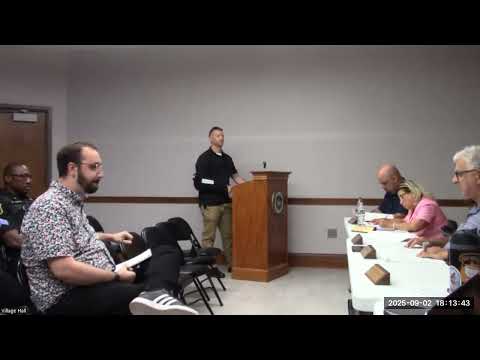
Village hears plan for formal hardship parking permits and electronic ticketing
Summary
The chief outlined a proposal to formalize overnight "overlook" permits (sample model: $85 for a 30-day hardship permit), tighten enforcement of existing code, and adopt electronic ticketing (vendors: Passport, T2). Trustees debated enforcement, landlord responsibility and a possible pilot; the board requested data analysis before any ordinance change.
The chief presented a multi-part proposal to address long-standing overnight-parking exceptions in Scotia, urging the village to replace ad-hoc approvals with a transparent, enforceable permit program and modern ticketing tools. He told trustees the current practice evolved from voicemail lists into an online request system but remains inconsistently enforced, producing repeat nightly requests by the same vehicles.
"Every night at least 25 vehicles appear on our overnight," the chief said, noting a sample list from a single night included 37 vehicles. He proposed a hardship permit modeled on other municipalities: an application, administrative checks (no outstanding parking tickets, building-inspector verification that no off-street parking exists), and a temporary paid permit (example in the materials: $85 for 30 days) that would allow police to verify eligibility quickly.
Trustees split over how broadly to allow hardship exemptions. One trustee opposed permitting hardship claims that arise from landlords converting single-family homes into multiple units, arguing that permitting such exceptions would shift responsibility from property owners to the village and could encourage further conversions. "I am completely and totally opposed to traditional hardship" in that context, the trustee said, and urged the board to address planning and landlord enforcement first.
Other trustees supported a formal, limited pilot, saying a structured permit process would reduce arbitrary approvals, improve enforcement and create a paper trail enabling follow-up with landlords and code enforcement. Several members sought data on the overnight list to classify entries by legitimate hardship, landlord-caused shortages, or convenience.
The chief also reviewed electronic ticketing vendors and features (mobile registration scan, license-plate photo, virtual permits) and presented cost estimates and procurement considerations. Materials cited an example annual subscription/operations figure and hardware costs; one figure mentioned in the discussion was an estimated annual subscription around $7,000, and company-collected collections rates were discussed (vendor example: 45% collection rate; industry standard cited at 22%). Trustees asked the chief to present cost details and vendor demos to the traffic committee and return with specific procurement options.
Board members did not enact ordinance changes at the meeting. Instead, they asked for a sample-night analysis of the overlook list and for the chief to brief the traffic committee and return with recommendations and cost estimates; the board also planned further discussion of whether changes should be limited to targeted hardship permits, seasonal waivers, or rotating/odd-even parking schemes.
Next steps: staff will analyze the overnight list for a representative night to categorize likely legitimate hardships, return cost estimates for electronic ticketing options, and provide draft language for any proposed ordinance amendments or pilot permit program.