Get Full Government Meeting Transcripts, Videos, & Alerts Forever!
Get email alerts on the Trail Maintenance topic
No spam. Unsubscribe anytime.
Trail maintenance plan for 400 Little Harbor Road delayed after questions on wetlands, alternatives and accessibility; site walk set
Summary
The commission heard a detailed proposal from Dylan Summers to construct a raised gravel 'turnpike' to stabilize a frequently muddy historic trail. Commissioners asked about rerouting, boardwalk alternatives, accessibility, maintenance needs and wetland delineation; they voted to postpone final action and scheduled a site walk for April.
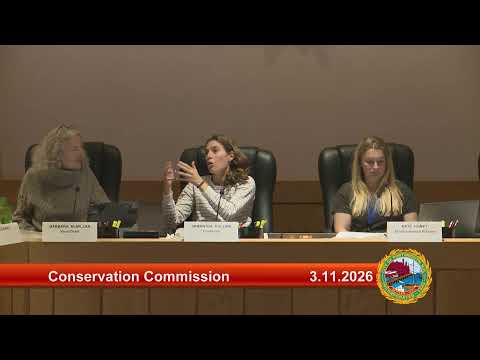
The Portsmouth Conservation Commission on March 2026 discussed a proposed trail maintenance project at 400 Little Harbor Road and voted to postpone final action so commissioners can inspect the site.
Dylan Summers, who identified himself as stewardship project manager with the "Society for Protection New Hampshire Forest," outlined plans to build a raised, hardened trail segment (a "turnpike") to keep walkers out of persistently muddy ground. Summers said the structure would use crushed stone and aggregate to raise the trail tread above the seasonal water table and would rely on stone retaining features rather than pressure-treated timbers.
"The goal of our project would be to address that area by putting in a hardened surface that would keep people in the trail corridor," Summers said, describing the anatomy of a turnpike: a coarse stone base, compacted aggregate walking surface, and ditches where needed to manage runoff.
Commissioners and public participants pressed Summers on alternatives, including rerouting the trail or building a boardwalk or bog bridge, plus long-term durability and accessibility. One resident with trail-building experience encouraged consideration of a bog-bridge in very wet years; Summers and commissioners discussed tradeoffs including the environmental impacts of pressure-treated lumber, maintenance cycles for boardwalks, and the desire to make the trail as accessible as practicable.
Summers said the turnpike typically requires removal of a thin layer of topsoil and an addition of about 8 inches of engineered aggregate; he said the structure reduces trail widening caused by users avoiding muddy sections. He acknowledged some portions of the planned work fall within the 100-foot and the 25-foot wetland buffers and said he will revise plans to show the 25-foot no-cut buffer on future drawings.
Commissioners asked for a maintenance plan (including where aggregate would be stockpiled), clarification on where leadoff and side ditches would be located, examples of similar projects, and confirmation of which state permits would be required. The commission and applicant also discussed wetland markers and interpretive signage; some members expressed concern about sign pollution in natural areas while others favored educational markers at trailheads.
After extensive discussion, the commission voted to postpone review of the application to the April meeting and to conduct a site walk (proposed April 1) so members can see micro-topography and better assess placement of ditches and other field-fit elements. The motion to postpone passed on a roll-call vote: Talia — yes; Alice — yes; Barbara — yes; Brian — yes; Oliver — yes; Lynn — yes; Chair — yes.
Next steps: the applicant will submit a revised application packet including any state permit materials, a maintenance plan, and example projects; staff will coordinate and publicize the site walk scheduled for the week before the April meeting.