Get Full Government Meeting Transcripts, Videos, & Alerts Forever!
Get email alerts on the Parking topic
No spam. Unsubscribe anytime.
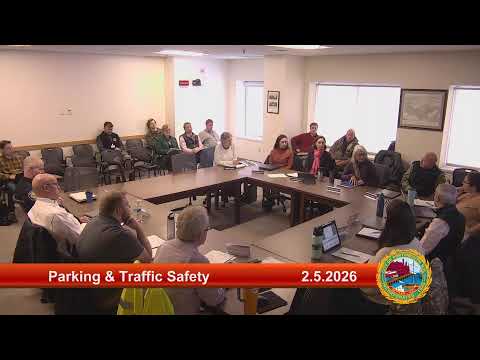
Portsmouth committee approves one-year resident access parking pilot on Parrot Avenue
Summary
The Portsmouth Park, Traffic & Safety Committee voted to adopt a limited one-year resident access parking pilot focused on Parrot Avenue and two nearby clustered neighborhoods; residents who register will park at no charge while non-residents will pay via app, with staff promising quarterly reports and monitoring for spillover effects.
The Portsmouth Park, Traffic & Safety Committee voted to adopt a one-year resident access parking pilot focused on Parrot Avenue and two small clustered neighborhoods near the Foundry garage.
Deputy City Manager Carl Weber, who introduced the scaled-back proposal, told the committee the design aims to prioritize residents while using modest monetization for non-residents to increase turnover. “Monetizing for non-residents helps the turnover of those spaces,” Weber said, adding staff plan “a big outreach campaign” and an initial kiosk on Parrot Avenue for people without the app.
The pilot would let residents who register with the tax office or parking office park in designated roadway spaces at no charge without starting an app session; non-residents would use the ParkMobile app and pay in the roadway at $1 per hour. Weber said the proposal includes a downtown workforce option comparable to the Foundry garage rate (about $0.30 per hour for a 10-hour day) and would be treated as a proof-of-concept: staff will gather data and report quarterly to the city council.
Public commenters and committee members pressed staff on enrollment and administration. Parking staff said the city has already populated about 1,500 license-plate entries into the resident discount list and that residents who registered in the past year would be rolled into the pilot without extra work. Committee member Barbara Sadek asked whether registration could be completed online; staff said they would explore online upload options while noting legal limits on sharing DMV-protected data.
Committee members also raised equity and operational questions: how teachers and low-wage downtown workers would be treated, whether monetizing streets could push cars into other neighborhoods or the Foundry garage, and how enforcement would work. Staff said the pilot would start with warnings during its first months, would validate residents annually and downtown employees quarterly, and would return to council if parking bleeds into other areas.
A motion to adopt the pilot was moved and seconded; after discussion the committee approved the pilot by voice vote and asked staff for quarterly reporting back to the committee and council. Staff indicated implementation would follow a council hearing likely in March, with actual parking changes expected some months later (staff said May–June is more likely than immediate implementation).
The committee requested that staff monitor enforcement costs, kiosk reuse, signage, and any spillover to adjacent lots, and to return with findings and potential adjustments after the pilot period.