Get Full Government Meeting Transcripts, Videos, & Alerts Forever!
Get email alerts on the Board Procedure topic
No spam. Unsubscribe anytime.
ZBA members push for clearer motion rules, findings and public-comment deadlines
Summary
Portsmouth ZBA members used a March 31 workshop to press for clearer procedures: more concise motions and explicit findings (to strengthen appeal defenses), clearer rules for sitewalks and agenda order, and deadlines or continuance triggers for late written submissions and public-comment time limits.
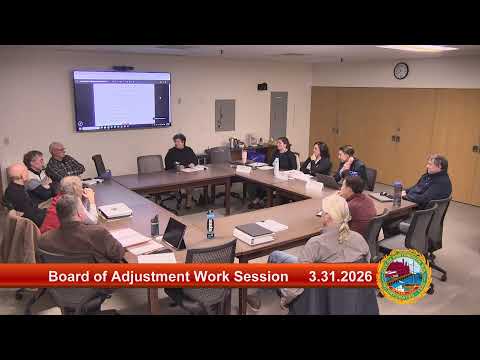
At the March 31 ZBA workshop, members spent substantial time on internal process: how the board frames motions and findings of fact, how to handle late evidence or written exhibits, and procedures for sitewalks, agenda order and public-comment time limits.
Several members urged that denials include explicit references to every criterion relied upon so staff can draft findings that are defensible on appeal. Staff and counsel advised that listing multiple reasons strengthens an appeal defense because a decision need only be right on one legal ground to be upheld; staff said they draft letters of decision directly from the meeting minutes and must issue decisions within five days as required by local procedure.
Board members proposed administrative options for trivial numeric deviations — for example, allowing an administrative approval or a short-form process for very small lot-coverage or dimensional changes — to avoid burdening applicants and the board with routine variance hearings. Staff said such a change would require ordinance or process adjustments and further legal review.
Members also discussed practical hearing-management items: the chair may be asked to decide on whether a sitewalk is necessary (members suggested routing requests through staff to the chair), and the board can vote at a meeting to take items out of order to improve efficiency. The group debated setting a firm deadline for written exhibits so materials submitted late would either be excluded or trigger a continuance to allow review.
On appeals and feedback, staff agreed to provide periodic written updates on cases under appeal so board members can learn from outcomes; staff cited two current appeals by address. The meeting closed with staff offering to prepare a short "cheat sheet" to explain what issues are addressed by technical advisory committee (TAC), planning board and site-plan review versus what is within the ZBA’s purview.
Next steps: staff will draft and circulate clarifying process language and suggested procedures to the chair for consideration; members indicated willingness to pilot any revised approach on less‑complex applications first.