Get Full Government Meeting Transcripts, Videos, & Alerts Forever!
Get email alerts on the Municipal Fees topic
No spam. Unsubscribe anytime.
Portsmouth fee committee endorses wide-ranging FY27 schedule updates, flags water/sewer and parking changes for council
Summary
The Fee Committee reviewed proposed FY27 fee updates across city departments, approving departmental recommendations and forwarding them for inclusion in the FY27 budget; notable items include larger water/sewer capacity charges tied to a rate study, planning application cap increases and debated parking rate changes for area garages.
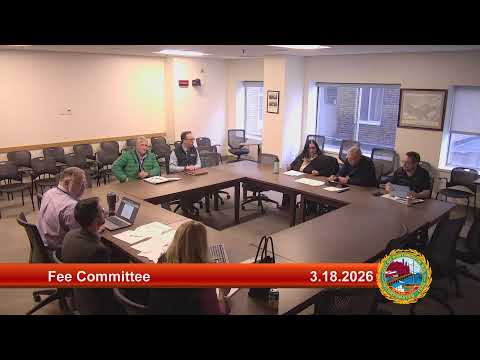
Michael Tucker, the city’s deputy finance director, opened the March 18 fee committee meeting and framed the review as an annual step to "ensure that our municipal fees remain aligned with the cost of providing services while also maintaining transparency and consistency across departments." The committee—composed of Councilors Taber, Maro and Bagley, with Karen Canard and the city manager as non‑voting members—worked through departmental packets and approved a series of fee changes to forward to the council as part of the FY27 budget resolution.
The committee accepted City Clerk recommendations that raise several administrative items, including increases to licensing and event-permit fees; staff noted some of those lines will need additional follow‑up because the clerk was not present. Planning and Sustainability proposed larger changes: a new $200 minimum application fee for Board of Adjustment cases, higher per‑$1,000 valuation fees (from $5 to $10), and increases to total application caps. Committee members debated raising the non‑residential total application cap; a motion to lift the cap to $8,000 was made and, after further alignment with doubled per‑thousand valuation rates, the committee amended the cap to $11,000 and approved planning fees as amended.
Fire and public works proposals were approved with comparatively narrower changes. The fire department added an occupancy fee for large assembly spaces and eliminated several small residential fees for placements and daycare-related permits. Public Works recommended raising encumbrance permit fees (first 30 days from $50 to $150) and creating a perpetual-care fee for memorial benches; those changes were approved.
Health staff refined temporary-event (fundraiser) permits into a two‑tier structure keyed to vendor counts and the committee amended the language to read "10 or more" vendors for the higher tier before approving the change.
Parking and transportation presented a broad package of behavior‑management pricing changes affecting permits, valet and transient parking, and garage rates. Committee discussion concentrated on resident Sunday free parking at the Foundry garage; members debated keeping the resident benefit versus adopting higher rates to manage demand. After discussion and amendment, the parking package was approved.
Water and sewer changes reflected the recommendations of a rate study: revisions included higher delinquent and meter service fees, expanded meter‑related charges, and substantial increases in some fire‑service capacity/connection charges (staff noted lower tiers for some customers will be balanced by a tiered rate structure). Staff emphasized adoption of the tiered volumetric structure is a prerequisite for applying some fixed‑charge changes; follow‑up memos on class allocation were promised for an April meeting. The committee approved the water and sewer package and recorded that several capacity‑related tiers rise notably (staff cited some increases above 100 percent in lower tiers for new connections).
Recreation and Prescott Park marina fees were updated primarily to raise non‑resident docking and daily/seasonal recreation rates; the committee approved the recommended revisions. No public commenters appeared; the committee adjourned after approving the departmental fee recommendations to forward with the FY27 budget. The committee’s approvals were by motion and voice vote; individual roll‑call tallies were not recorded in the transcript.
Next steps: the committee’s recommendations will be incorporated into the FY27 budget resolution and sent to council with the committee’s guidance; several items (notably water/sewer class allocation questions and some planning fee data points) will receive additional staff follow‑up before council adoption.