Get Full Government Meeting Transcripts, Videos, & Alerts Forever!
Get email alerts on the Housing Action Plan topic
No spam. Unsubscribe anytime.
Mayor’s blue-ribbon housing panel narrows priorities from 146‑point action plan, eyes tax incentives and zoning changes
Summary
The Mayor’s Blue Ribbon Committee on Housing reviewed Progress Portsmouth’s 146‑item action plan, agreed to prioritize high‑impact, near‑term items, and tasked staff to research legal and financial tools including tax‑incentive options, ADU compliance fixes and implementation of the state office‑to‑housing law effective July 1.
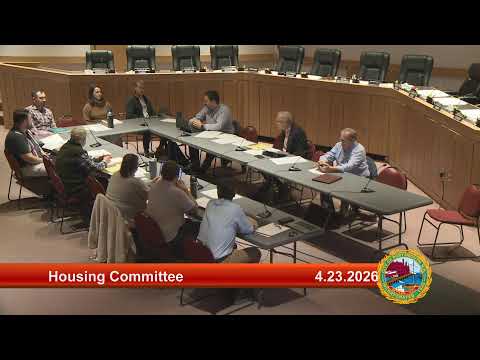
The Mayor’s Blue Ribbon Committee on Housing met April 23 in Portsmouth to begin translating Progress Portsmouth’s 146‑point housing action plan into a short list of near‑term actions and longer‑term priorities. Committee co‑chair John Taber said the group’s immediate work will be to separate high‑impact, achievable items for this term from measures better saved for the master‑plan timeline.
"It's a very good document with 146 areas for action," Taber said, urging the committee to use an impact‑and‑feasibility matrix to identify a limited set of deliverables. Taber reviewed prior committee work, citing the Sherburn site, corridor rezoning and the creation of a housing trust fund that he said currently holds about $500,000.
Staff from the planning department, led by Peter Britz, told the committee they have added capacity to support the panel and will provide short summaries and recommended priorities. "We've freed up some capacity," Britz said, "and the idea is that we'll be able to serve the committee a little better with a little more staff support." The committee agreed staff should compile a shorter, staff‑prioritized list for discussion and bring tools for a real‑time ranking exercise at the next meeting.
Members focused discussion on several policy levers: zoning and land‑use reform to allow more by‑right housing, incentive packages that combine density or parking relief with affordability covenants, using the housing trust fund for gap financing, and options for preserving naturally occurring affordable units. Committee member Byron Matau summarized the local urgency: "There's a feeling of stuckness…in no small part because of the conditions of the housing market locally and more regionally," he said, urging practical steps that reduce that friction.
A prominent thread of the debate centered on tax incentives and whether state mechanisms such as 79E (a historic‑rehabilitation/tax incentive) can be applied or whether the city should design a local tax‑freezing or abatement program in exchange for income‑restricted rents. Members asked staff to consult the legal department and assessor about statutory limits and implementation mechanics before proposing a specific local program.
The committee also addressed accessory dwelling units (ADUs) and enforcement. Staff said they are preparing an updated ADU handbook and flagged compliance burdens—annual affidavit reporting and limited enforcement resources—that limit the city’s ability to verify owner‑occupancy or other restrictions. Members proposed both process streamlining and incentive pilots (for example, temporary tax relief) to encourage workforce leasing of ADUs.
On statutory timing, staff confirmed a recent state law easing office‑to‑residential conversions in commercial districts takes effect July 1st; members discussed the need to ensure local regulations and implementation language align with the state statute before that date.
Taber closed the meeting by asking members to bring a short ranked list of priorities to the next session; the committee set a standing meeting time (third Thursday, 5:30 p.m.) and scheduled the next meeting for May 21. A brief procedural motion to suspend the rules was taken during extended discussion, and the meeting ended after a motion to adjourn passed.
What happens next: staff will prepare a condensed list of staff‑recommended short‑term and long‑term actions from the Progress Portsmouth plan, run a work session with a scoring matrix at the next meeting, and return with legal and fiscal assessments on proposed incentive structures and ADU enforcement options.