Get Full Government Meeting Transcripts, Videos, & Alerts Forever!
Get email alerts on the Vha Reorganization topic
No spam. Unsubscribe anytime.
House subcommittee presses VA on reorganization, staffing and IG cuts
Summary
Members of the House Appropriations subcommittee pressed VA Secretary Collins over a proposed VHA reorganization, staffing losses and a $12 million cut to the Inspector General’s budget while reviewing the administration’s $488 billion FY27 request.
House Appropriations subcommittee members pressed Department of Veterans Affairs Secretary Collins during a May 21 hearing over the department’s proposed VHA reorganization, recent staffing reductions and a $12 million proposed cut to the office of the Inspector General.
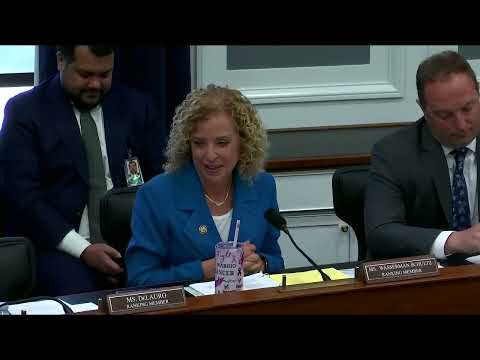
The exchange opened as committee members said they received the department’s budget materials late and raised concerns about major programmatic shifts in the $488 billion fiscal 2027 request. Miss Wasserman Schulz told the panel she supported reforms but criticized the timing and transparency of the administration’s submission and highlighted what she called “a 14% increase in community care” and the IG funding cut.
Why it matters: Committee members warned the changes could affect care and oversight for veterans. The subcommittee pressed the department to show how the reorganization and staffing decisions will maintain or improve veteran outcomes, and asked for clearer budgetary data on community care spending.
Secretary Collins defended both the reorganization and workforce reforms, saying the department needed a streamlined leadership structure and better local control for hospitals. "When you take the veteran perspective first, then you put policies in line that begin to change that," Collins said in his opening remarks. He said the reorganization (often called RISE) reduces a multilayered leadership structure to give local executive directors clearer authority to address problems.
On staffing, Collins told members the department has adopted a manning document to target hiring where positions are needed and cited reductions in claims backlogs, saying they fell from roughly 260,000 to below 75,000 with a claims-processing accuracy of 94.1%. Members disputed the broader staffing picture, noting an Inspector General report that found widespread shortages and pointing to roughly 30,000 departures and the elimination of 14,000 vacant positions.
Members also raised pay-cap constraints and the limited scope of Dole Act waivers, arguing those rules make it harder to recruit some specialists. Collins acknowledged that pay ceilings pose challenges for certain specialties and that the 300-position Dole waiver is too small to meet demand; he said the department is working on a more equitable approach.
What’s next: Committee members requested more detailed, granular metrics tying the reorganization to veteran outcomes and said they will follow up with written questions. Collins committed to providing additional documentation and to continued engagement with lawmakers and stakeholders.