Get Full Government Meeting Transcripts, Videos, & Alerts Forever!
Get email alerts on the Infrastructure Finance topic
No spam. Unsubscribe anytime.
DPW warns water, sewer and solid-waste enterprises face rising debt and squeezed capital
Summary
The Department of Public Works told councilors FY2027 pressures include rising debt service, higher disposal and fuel costs, and fewer transferable revenues; the water and sewer enterprises face long-term debt schedules and capital needs even as one large commercial user signals reduced consumption.
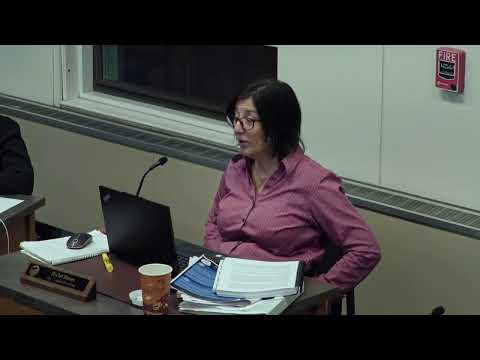
Director Lcalia told the Council that the Department of Public Works manages extensive infrastructure—160 miles of roads, 85 miles of sidewalks, 38 bridges, 11 miles of bike paths and large utility networks—and that the department is managing roughly $40 million in active capital projects.
Lcalia said rising operating costs and debt-service obligations are squeezing enterprise capital. "Taken together, these items are more than 34% of the overall [water enterprise] budget," she said, noting principal and interest on prior plant projects and ongoing wastewater plant upgrades increase fixed costs. Lcalia also cited uncertainty because a major industrial customer (Coca-Cola) has reduced usage to less than half of historical levels and signaled a full departure later this year, which complicates revenue forecasting.
On the sewer side, Lcalia detailed more than $30 million in ongoing plant upgrades whose debt service will rise in coming years. She explained the city balanced FY27 through a combination of transfers from stabilization funds and scaled-back capital transfers; she warned that transferring reserves is not a sustainable long-term strategy.
Lcalia also described constraints across other DPW responsibilities: staffing vacancies (18 of 83 positions), shortages of CDL-qualified truck drivers and engineering staff, and volatile construction and fuel markets that push up line-item costs such as asphalt, salt and disposal fees. Snow-and-ice operations were highlighted as an example of unpredictable but high-cost needs: the department purchased 2,965 tons of road salt this past winter at $111.24 per ton and recorded more than 10,000 staff hours on winter response.
Councillors sought more transparent line-item breakdowns for CIP items tied to large projects such as Picture Main Street and asked where Chapter 90, grant, and enterprise funds are allocated. Lcalia said MassDOT funds most Main Street drainage and that water/sewer pre-appropriation had been set aside years earlier for infrastructure upgrades tied to TIP projects but agreed to provide more disaggregated capital-plan detail.
The DPW presentation framed FY2027 decisions as a balance between preserving enterprise services and managing limited capital flexibility; councilors requested clearer reporting of encumbrances, project status, and the sources of funding used to underwrite large TIP projects.