Get Full Government Meeting Transcripts, Videos, & Alerts Forever!
Get email alerts on the Grease Trap Ordinance topic
No spam. Unsubscribe anytime.
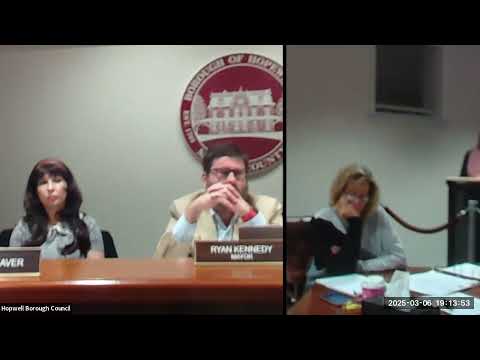
Council carries public hearing on grease-trap maintenance ordinance after businesses call for more outreach
Summary
After lengthy public comment and technical Q&A, Hopewell Borough Council voted to carry the public hearing on Ordinance 894 (grease-trap maintenance) to its April meeting to allow more outreach to restaurants and additional technical review, including whether to require licensed-plumber certification.
Hopewell Borough Council on Monday carried the public hearing on Ordinance 894, a proposed update to local sewer and food-establishment rules that would tighten requirements for grease-trap sizing, maintenance and certification.
The ordinance, read by title during the meeting, would require restaurants to ensure grease traps are properly sized and functioning, and would allow the borough to seek reimbursement when inadequate maintenance causes backups or municipal cleanup costs. Doug, the borough administrator, said the change was prompted by repeated sewer backups and a recent incident that required borough crews to jet sewer lines and pay contractors to clean the system.
A local restaurant owner who identified herself in the transcript as "LIA CH lunchette, the owner" urged the council to do more outreach, saying "it matters that we feel included" and warning that small businesses can be surprised and burdened when ordinances go into effect without direct notice.
Council members and staff acknowledged that the ordinance grew from a technical recommendation by health staff and the borough sewer operator and that, in some cases, the borough's existing code only required annual reporting rather than a certification that a trap was functioning. Council member Lynn apologized for not having reached out earlier and said she would do better. "I should never have assumed that restaurants had been talked to," she said in the discussion recorded in the transcript.
The council spent extended time on technical questions raised by residents and members of the economic-development committee, including whether routine grease-trap cleaning reports already submitted to health inspectors would suffice, and whether the borough should require an annual certification from a licensed plumber to verify plumbing connections and that traps were functioning as designed. Doug said the proposed ordinance would add "a little bit of teeth" to enable enforcement where traps are not maintained and to protect residents whose basements have flooded.
Rather than adopt the ordinance as drafted, council members voted to carry the public hearing to their April meeting to allow targeted outreach to downtown restaurants and to gather additional information on current maintenance practices and the roles of grease-trap cleaners versus licensed plumbers. The council president said the hearing would be continued so the borough could solicit technical samples of maintenance reports and meet with business owners and the Board of Health.
The hearing was carried by roll call vote; the transcript indicates the motion was seconded and adopted without recorded opposed votes. The borough will hold additional outreach, and any substantive changes to the ordinance would require reintroduction or an amended reading at a future meeting.