Get Full Government Meeting Transcripts, Videos, & Alerts Forever!
Get email alerts on the Arts And Culture topic
No spam. Unsubscribe anytime.
Arts-and-culture subcommittee urges short-term activation of idle storefronts, neighborhood cultural projects and public-art wayfinding
Summary
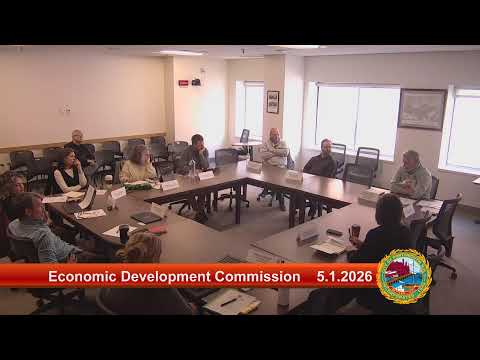
At the May 1 Portsmouth Economic Development Commission meeting, the commission’s arts-and-culture subcommittee proposed three near-term priorities: short-term use of underutilized commercial space for artists and small businesses, gateway neighborhood cultural activation and public-art wayfinding that links art to nearby businesses.
Anna, speaking for the commission’s arts-and-culture and enrichment subcommittee, laid out three priorities the group recommends the Economic Development Commission pursue within months rather than years: activating underused commercial storefronts for short-term artist or small-business use; advancing cultural activation in gateway neighborhoods identified in the master plan; and using public art as a wayfinding tool that connects people to nearby businesses via signage or QR codes.
The subcommittee framed arts and culture as “economic infrastructure,” saying the work supports jobs and generates tax revenue while helping meet several City Council goals. Anna said the subcommittee reviewed the master plan and the public-arts committee’s existing inventory and emphasized the importance of coordination to avoid duplicating work already underway.
Commissioner Seir told the subcommittee he had begun outreach to local industry contacts and planned to conduct comparative research on similar initiatives in other cities; Ben Vancamp also indicated he would share materials with the subgroup. Members and staff noted there are multiple “layers” to a short-term activation framework — private-property agreements, planning and inspection rules, zoning and any sign-versus-mural distinctions — and recommended staff research permitting and review processes that could affect implementation.
Sean of the Office of Economic Development said the public-art review committee already maintains an inventory that the subcommittee could extend, and staff offered to report back on whether murals are treated as signs or require a separate review. The subcommittee suggested that any guidance on public art and temporary use of space should feed into the planned CIP study of artist live/work space.
The group also flagged an upcoming mural unveiling (owner Judge Stain) tentatively set for Saturday, May 23, as an example of the kind of local activation the subcommittee wants to support. Members agreed the ideas are low-cost and potentially quick to pilot if staff can clarify permitting and align work with the public-arts committee and council priorities.
Next steps: the subcommittee will continue outreach and research; staff will report back on mural/permitting rules and how existing inventories and the CIP study could be coordinated with the subcommittee’s proposed initiatives.