Get Full Government Meeting Transcripts, Videos, & Alerts Forever!
Get email alerts on the Housing Policy topic
No spam. Unsubscribe anytime.
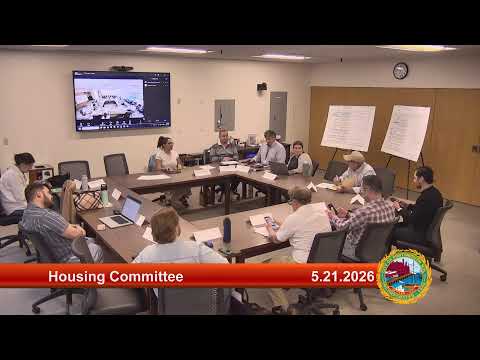
Portsmouth committee narrows housing action plan, elevates zoning audit and 79-E incentives
Summary
At its May 21 meeting the Portsmouth Housing Blue Ribbon Committee approved minutes and began prioritizing a condensed housing action plan to send to the council by July, centering a comprehensive zoning audit and exploring RSA 79‑E incentives and housing trust fund deployment as top actions.
The Portsmouth Housing Blue Ribbon Committee met May 21 to approve prior minutes and to begin prioritizing a condensed housing action plan staff trimmed to 26 recommended items. The group agreed to deliver a short list to the City Council by July and to use the committee’s subsequent year-and-a-half timeline to refine implementation details.
Members voiced broad agreement that zoning reform should be the committee’s principal umbrella priority. Committee participants said a comprehensive zoning audit or zoning review (listed in staff materials as Z21 and related items) would capture many discrete actions — from missing‑middle allowances and multifamily zoning to lot‑size and dimensional updates — that could increase supply while tailoring changes to neighborhood contexts.
The meeting also revisited a proposal originally raised by committee member Eric Wyberg to offer tax relief or freeze assessed values for existing apartment buildings. Staff and legal counsel advised that New Hampshire statutory limitations mean broad tax relief likely requires enabling state legislation, but that RSA 79‑E-style incentives (a state statute municipalities can implement by council action for certain revitalization areas) could be used more creatively as a local tool if the council directs it.
Participants emphasized the limits of municipal control — cited repeatedly was a committee estimate that Portsmouth has under 2% developable land within its 15.5 square miles — and urged the group to focus on “levers we can pull,” such as targeted zoning changes, deploying the city’s housing trust fund, fee structures and streamlined review pathways for projects that meet affordability goals.
Committee members also pressed for attention on preservation and equity measures: preserving federally subsidized units (PA10 on staff lists), special‑population housing strategies for seniors and people with disabilities, and incentives for deed‑restricted affordable and workforce housing. Members discussed bundling related items from the longer Progress Portsmouth list so the condensed action plan identifies achievable, implementable items the master plan and planning consultants can then operationalize.
There were procedural steps taken during the meeting: members moved, seconded and approved the previous meeting’s minutes (one abstention from a member who said they were not present at the prior meeting). The committee agreed to reconvene on the second Thursday schedule, with the next meeting set for June 11. Staff were asked to produce the condensed prioritized list based on members’ sticker rankings and to indicate which lower‑level items nest beneath the zoning audit bucket.
The committee opened public comment at 5:30 p.m. and adjourned after instructing staff to compile and circulate the condensed list for council submission and further committee work. The group will return in June to refine priorities and to begin drafting implementation steps and responsible parties for each selected action.