Get Full Government Meeting Transcripts, Videos, & Alerts Forever!
Get email alerts on the Sea Level Rise topic
No spam. Unsubscribe anytime.
Residents warn San Rafael could face daily flooding within about 25 years
Summary
A recorded presentation and a long-term resident warned that San Rafael is highly vulnerable to sea level rise, saying there may be about 25 years to prepare before flooding becomes a near-daily problem and stressing risks to homes, businesses and the local economy.
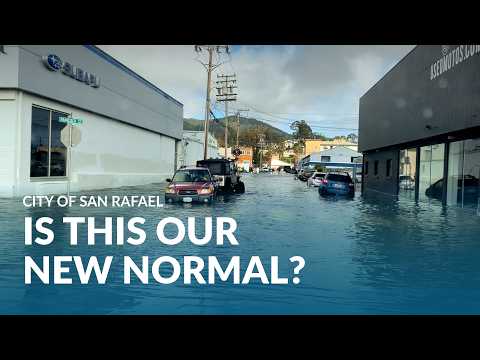
A recorded presentation about coastal risk warned that San Rafael is among the Bay Area communities most vulnerable to sea level rise and urged immediate preparation to limit future damage. "San Rafael is one of the most vulnerable communities in the whole Bay Area," a presenter said, adding that "we only have about 25 years to act before that flooding becomes just basically daily."
The presentation framed the next decade or two as a critical adaptation window. The presenter said sea level rise is already underway and that "the only thing we can do is use the next 10 or 20 years to be as ready as possible," arguing that mitigation alone will not avert near-term increases in coastal flooding. The message emphasized consequences for local lives and commerce: "The risks is increasing significantly for businesses, for residents, and for the entire city and county," the presenter warned, saying inaction could "wipe out an entire community."
A longtime local voice provided personal context. "I've been here 60 years and I've never seen it like this," the resident said, underscoring how unusual recent conditions feel to people who have lived in the community for decades. The presentation also highlighted economic vulnerability, stating that coastal cities could suffer "enormous economic losses" if no action is taken and that emergency events could remove local economic activity.
The presentation repeatedly urged treating high tides and current flooding as a preview of future conditions rather than isolated events. "People think that it's just a high tide or something like that, but it's really, this is a preview for the future," the presenter said, calling for planning and preparation to reduce foreseeable damage. The recording concluded by asking whether the effects would extend beyond the city to the county, prompting listeners to consider broader regional impacts.
No formal proposals, policy texts, or votes were included in the recording, and the presentation did not cite specific statutes, ordinances, funding sources, or timelines beyond the 10–25 year preparedness window. The recording therefore serves as a public-warning and awareness piece urging local officials and residents to prioritize adaptation planning.