Get Full Government Meeting Transcripts, Videos, & Alerts Forever!
Get email alerts on the Sewer Rates topic
No spam. Unsubscribe anytime.
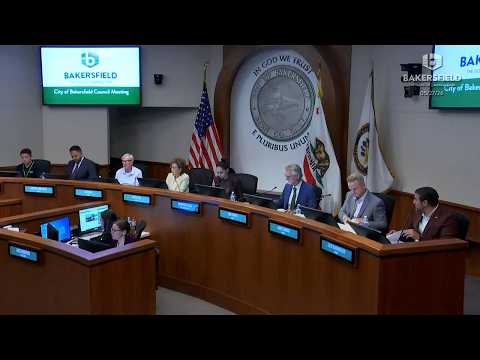
Bakersfield council approves phased sewer rate increase after heated public debate
Summary
After hours of public comment and council debate, Bakersfield approved a multi‑year sewer rate increase to address aging infrastructure and avoid depleting reserves; councilors split on timing and asked staff to return with low‑income assistance options.
The Bakersfield City Council voted Wednesday to approve a phased increase in sewer rates after a months‑long review of the utility’s aging pipes, treatment‑plant needs and limited reserves.
Councilors adopted the staff‑recommended Prop 218 proposal, which begins at a lower first‑year rate than an earlier plan and phases further increases over several years to fund operations, maintenance and a staged capital program. City staff said the proposal includes a mix of pay‑as‑you‑go funding and modest bonding to spread large capital costs; staff described scenarios that would require heavier bonding but cautioned those would raise long‑term interest costs. City Manager Kle told the council that without a rate action the sewer enterprise would draw down reserves to dangerously low levels and risk service failures.
Why it matters: City staff and outside consultants presented a 15‑year capital plan showing extensive deferred maintenance and programmatic needs. The city clerk reported 1,403 written protests were received, of which 1,186 were validated — far fewer than the 53,212 valid protests that would have defeated the increase under Prop 218. That cleared the way for a council decision rather than a protest outcome.
Council debate and votes: Council Member Arias moved an amendment asking staff to develop a one‑time allocation to assist very‑low‑income and fixed‑income households; that motion failed on a 2–5 vote. A later motion to adopt the staff recommendation passed on a 5–2 roll call (Vice Mayor Core and Council Member Weir voted no). The roll call supporting the measure was: Arias (yes), Gonzalez (yes), Smith (yes), Coleman (yes), Basher (yes); Core (no), Weir (no).
What the city said: Staff described the recommended plan as a compromise that reduced the initially proposed $950 increase by phasing projects and using limited bonding. The city emphasized the recommended starting rate covers maintenance and operations and that later increases are intended to build reserves and pay for larger plant improvements; staff said full replacement of Plant 2 and longer‑term expansions are not fully funded by the first phase and would be subject to later planning and financing steps.
Customer protections and next steps: Several council members pressed staff for measures to ease the burden on vulnerable households. Council Member Arias and others asked staff to return with options; a subsequent council motion asked staff to bring back a one‑time assistance program for very‑low‑income and fixed‑income households if the council chose to allocate one‑time general‑fund or contingency dollars later in the budget process. Staff told council that a modest multi‑million‑dollar one‑time allocation could meaningfully reduce bills for qualifying households but that ongoing assistance would require a sustainable funding source.
Bottom line: The council advanced the rate schedule to preserve sewer system reliability and avoid deeper reserve depletion, while splitting over timing and the size of debt to fund larger projects. Staff will return with implementation steps and, if directed by council in future budget action, options for targeted aid to vulnerable households.