Get Full Government Meeting Transcripts, Videos, & Alerts Forever!
Get email alerts on the Parks Rules topic
No spam. Unsubscribe anytime.
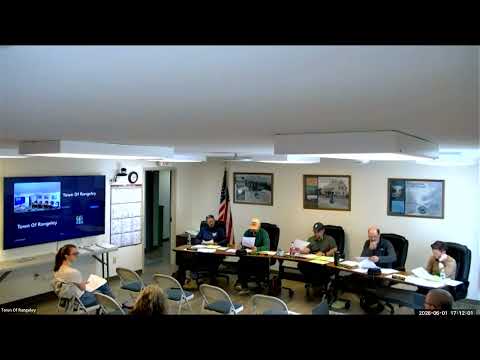
Rangeley board approves first reading of revised parks rules after debate over nonswimmer, dog and enforcement language
Summary
The Rangeley board approved a first reading of revised town parks rules after members debated a proposed requirement that responsible adults over 18 accompany nonswimmers, where dogs may be off-leash, and who enforces violations; the board asked staff to clarify wording and signage before final adoption.
The Rangeley board voted to approve the first reading of revised town parks rules and regulations after members exchanged concerns about safety language, dog access and enforcement.
Park committee members presented months of work on the draft, which reorganizes sections on hours, prohibited conduct and a graduated penalty structure for first, second and third offenses. In discussion the board focused on Section 2.03, a provision that would require a “responsible adult, older sibling or guardian” over the age of 18 to accompany nonswimmers. Several members warned that enforcing an 18‑year threshold could effectively bar many 10–13‑year‑olds from using playground facilities; others said the language was intended to reduce safety risk at the dock and swim areas. Members recommended rewording the clause to clarify that “nonswimmer” means a person unable to swim or otherwise unable to safely be in the water, rather than any adult who is not actively swimming.
The board also discussed life‑jacket requirements for the dock and whether that rule reflected previous versions of the park code. On enforcement, the draft cites police authority but members noted the town no longer staffs lifeguards; the board agreed the parks director and parks personnel should have initial enforcement authority and that signage and QR codes could help notify users of rules.
Members debated how to handle dogs in park zones—boat ramp, point, swim area, picnic and playground—and suggested referencing the town’s leash ordinance rather than duplicating it. The board asked staff to reassess signage at the point (where a “no dogs” sign currently exists) and to propose clearer mapping of areas where dogs are permitted or restricted.
After the discussion, the board approved the first reading with the suggested wording and signage changes and directed staff to return with the revised language for final consideration. The decision was procedural; the first reading passed by voice votes without a roll‑call tally recorded.
What’s next: staff will prepare the rewritten language, update signs and add QR‑code links to the posted rules, then bring the item back for final adoption.